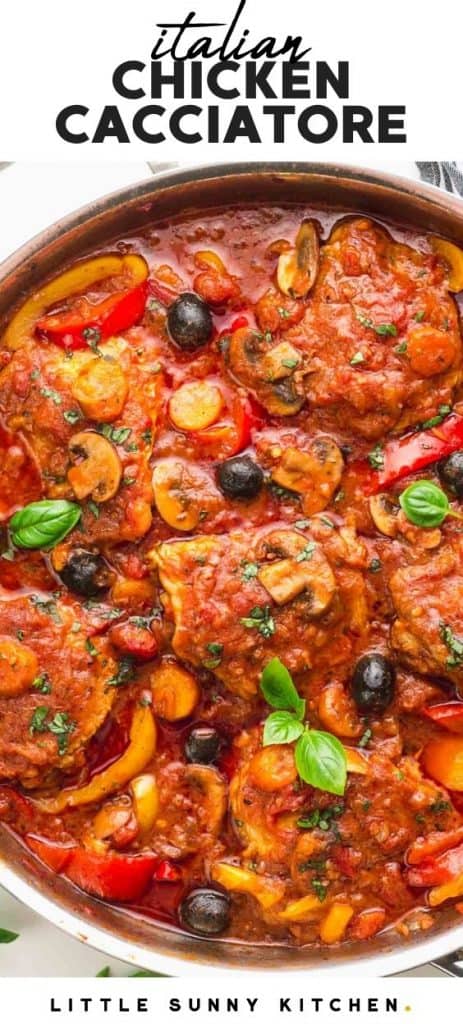
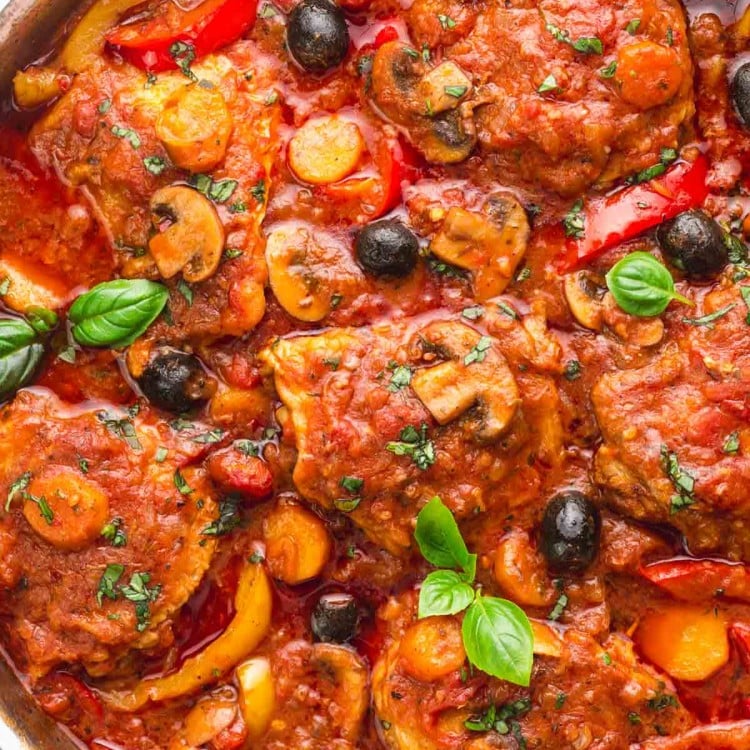
Chicken cacciatore is a rustic Italian chicken dish with tender thighs braised in a rich tomato and red wine sauce. This one-skillet version has deep, savory flavor and plenty of sauce for serving over pasta, mashed potatoes, or rice.
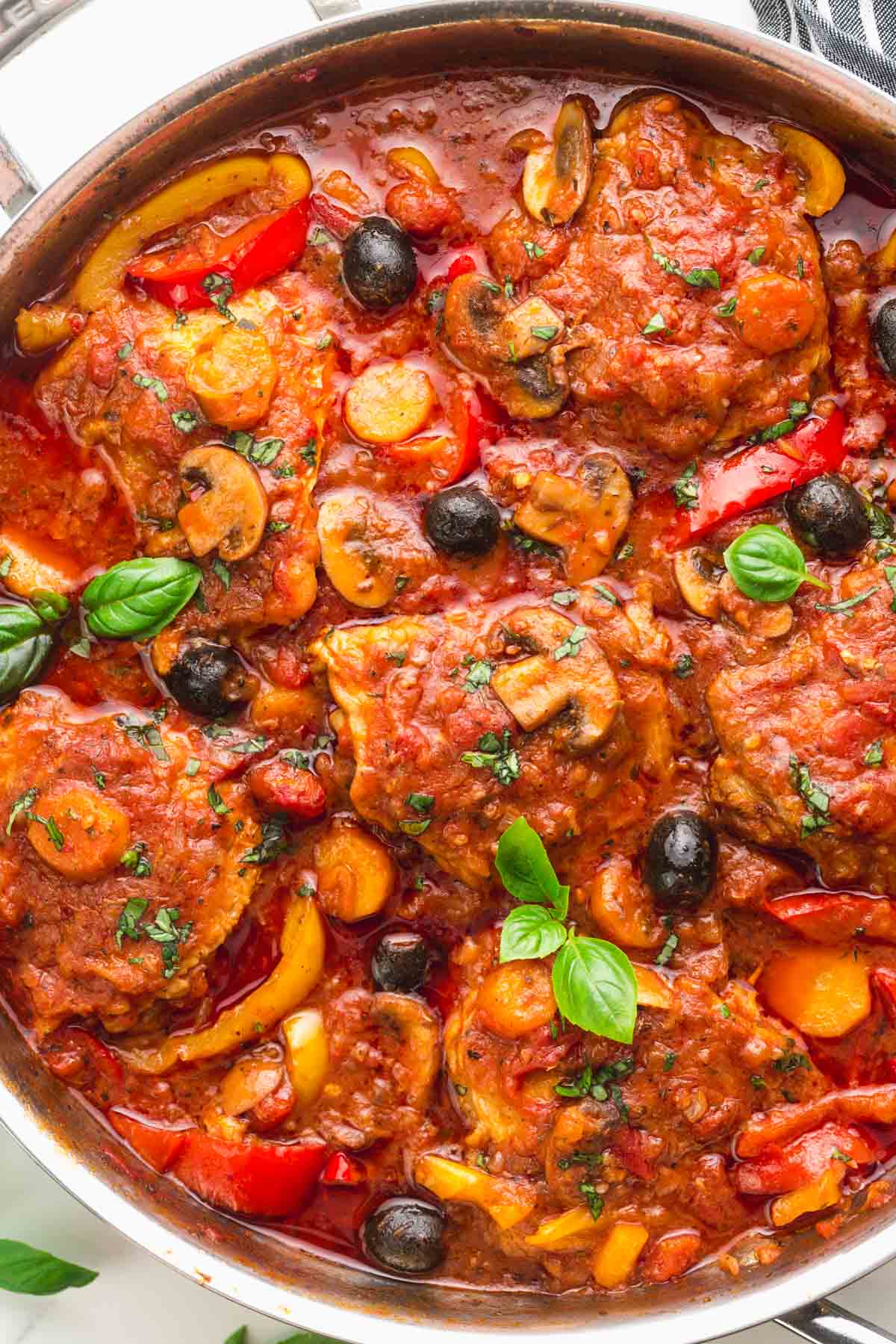

What Makes This Chicken Cacciatore Different
Cacciatore means “hunter style” in Italian, and there is no single right way to make it. In this version, the flavor starts with a good sear and builds in layers.
Browning the chicken until golden leaves plenty of flavorful bits behind, then the red wine lifts them straight into the sauce. Tomato paste adds depth, while the vegetables and olives bring sweetness, earthiness, and a little briny bite. Bone-in, skin-on chicken thighs stay tender as they slowly simmer and soak up all that flavor.
By the end, you have tender chicken and plenty of tomato sauce to spoon over pasta, mashed potatoes, or crusty bread, with just one skillet to wash.
A Few Ingredient Notes
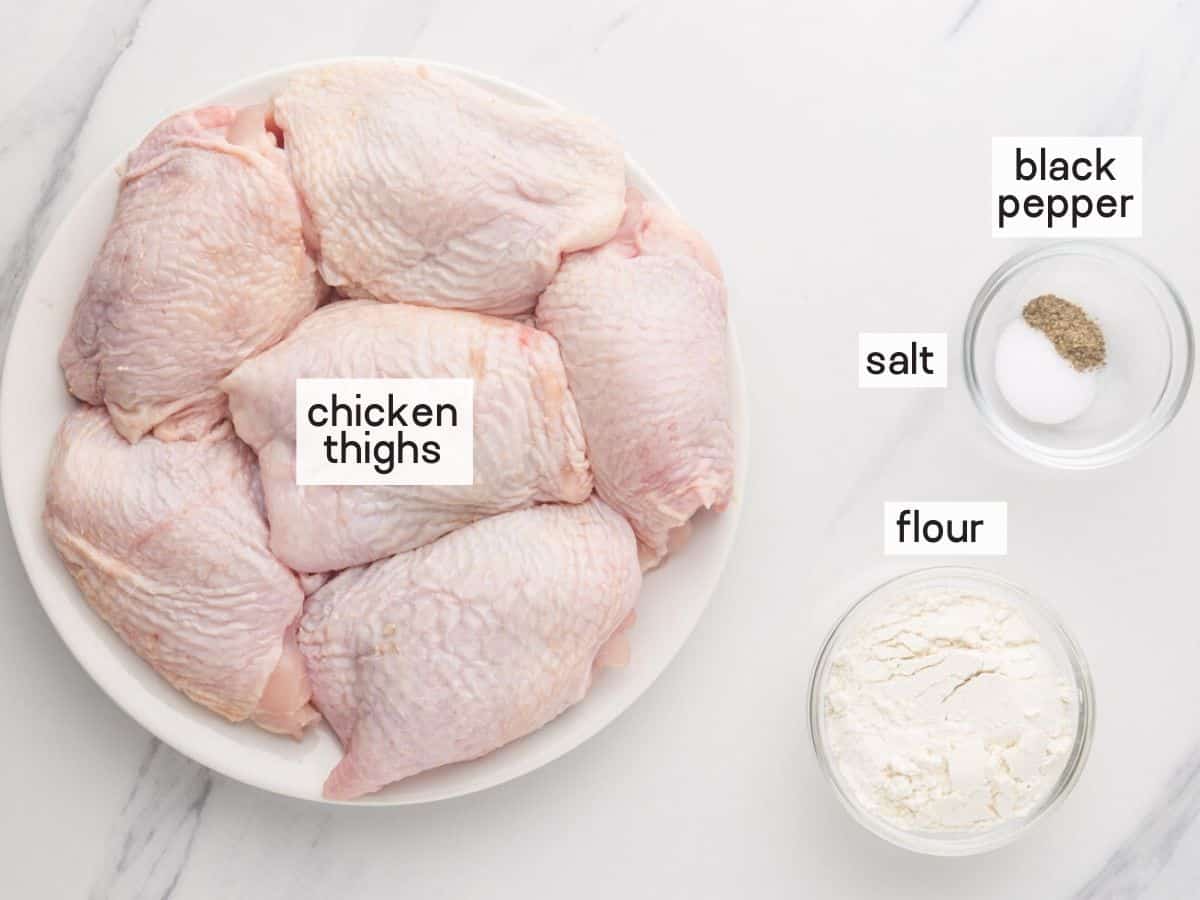
- Chicken thighs: Bone-in, skin-on chicken thighs are ideal for this recipe because they stay tender during the long simmer. Browning the skin first also adds flavor to the sauce.
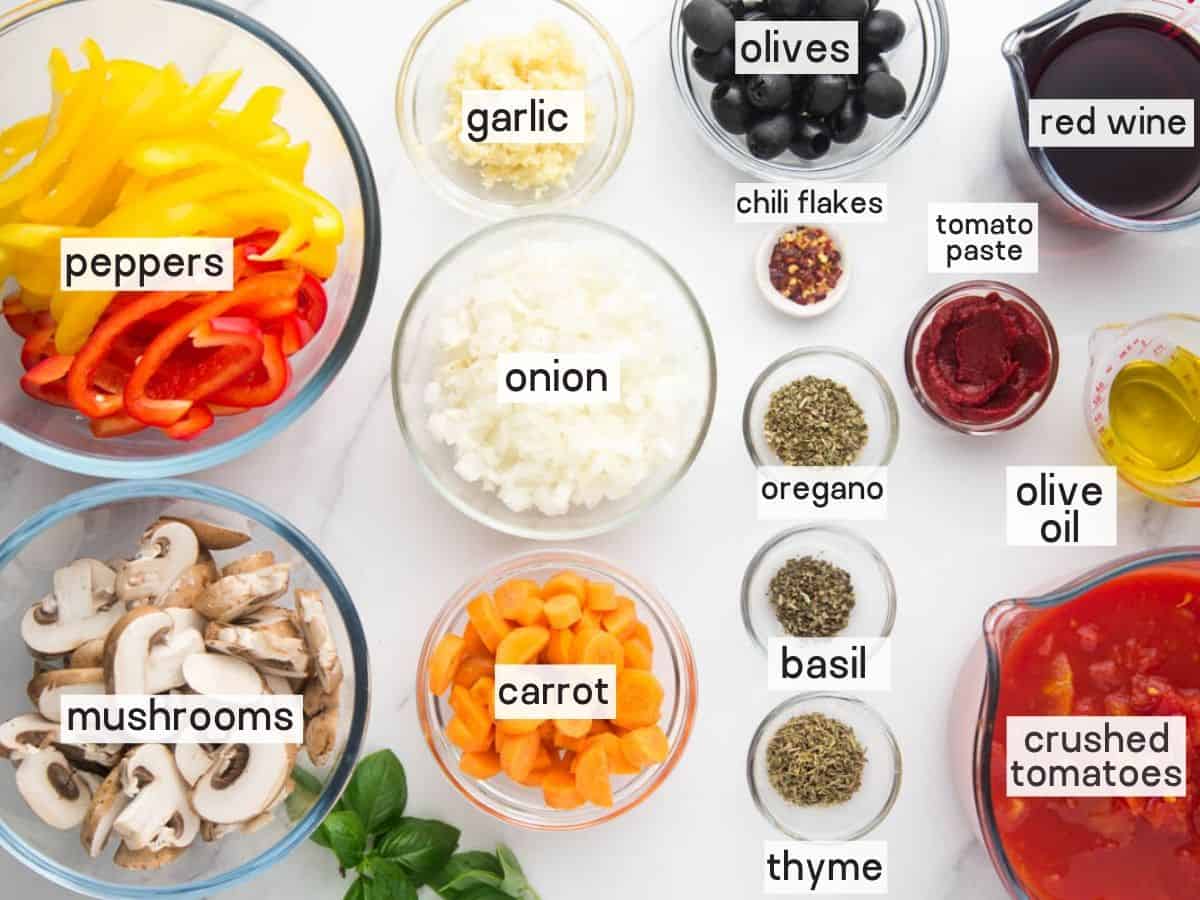
- Red wine: Use a dry red wine that you enjoy drinking. I used Merlot, which gives the sauce a rich flavor without making it too heavy. Dry white wine can be used for a lighter result, or you can replace the wine with chicken broth.
- Mushrooms and carrots: I recommend using both. The mushrooms add savory, earthy flavor, while the carrots bring a little natural sweetness to the sauce.
- Tomato paste: This adds concentrated tomato flavor and gives the sauce a little more body.
- Olives: The olives add a salty, briny bite that balances the sweetness of the tomatoes and vegetables.
How to Make Chicken Cacciatore
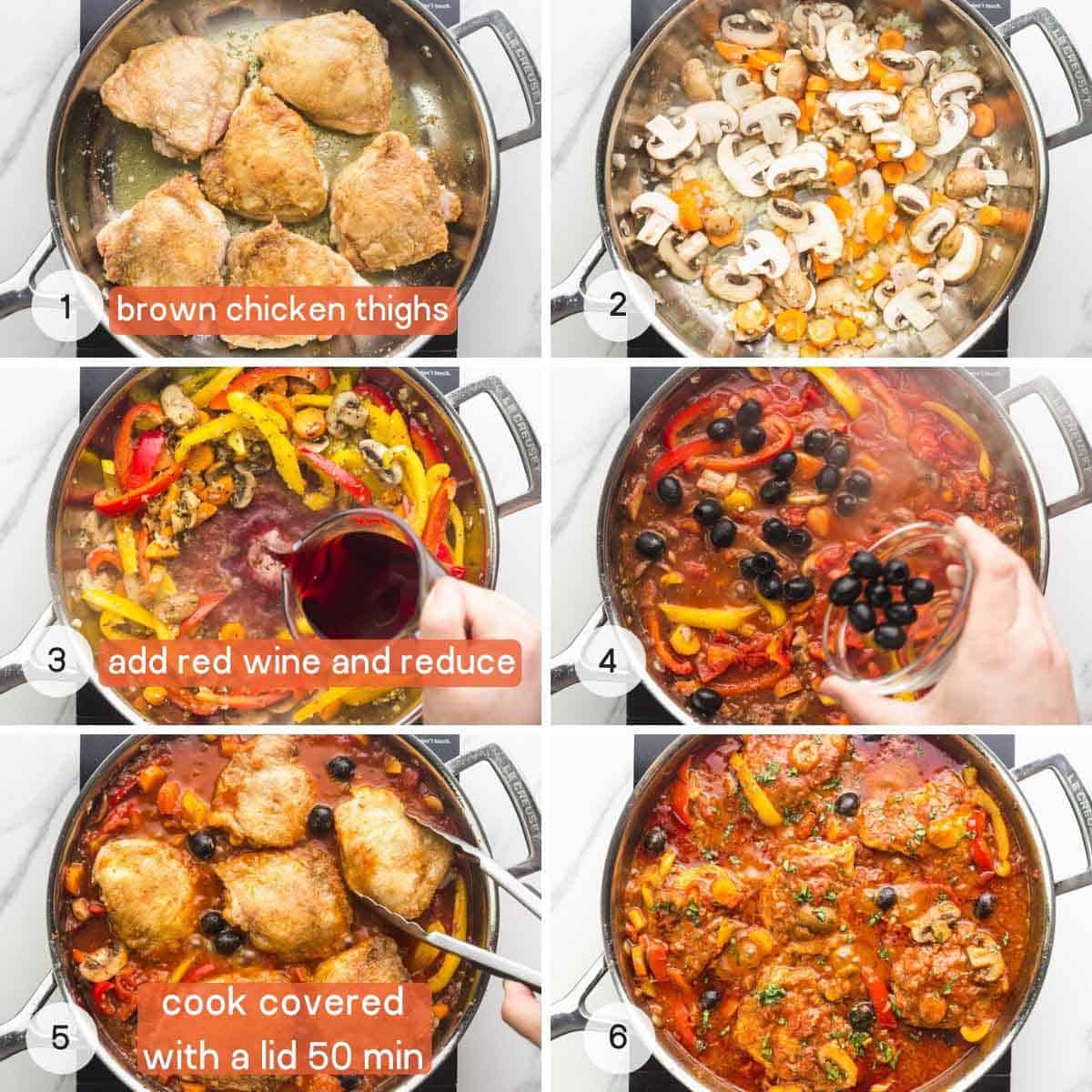
Most of the work happens before the chicken starts to braise. Season and flour the thighs, then brown them until golden on both sides. Cook the vegetables in the same skillet, pour in the red wine, and scrape up all the flavorful bits from the bottom.
Once the wine has visibly reduced, add the tomato paste, diced tomatoes, olives, and seasonings. Return the chicken to the skillet with the skin facing up, cover, and keep the sauce at a gentle simmer until the thighs are very tender. Finish the sauce uncovered for a few minutes so it can thicken before serving.
The full recipe with exact ingredient amounts and detailed instructions is in the recipe card below.
What to Serve Chicken Cacciatore With
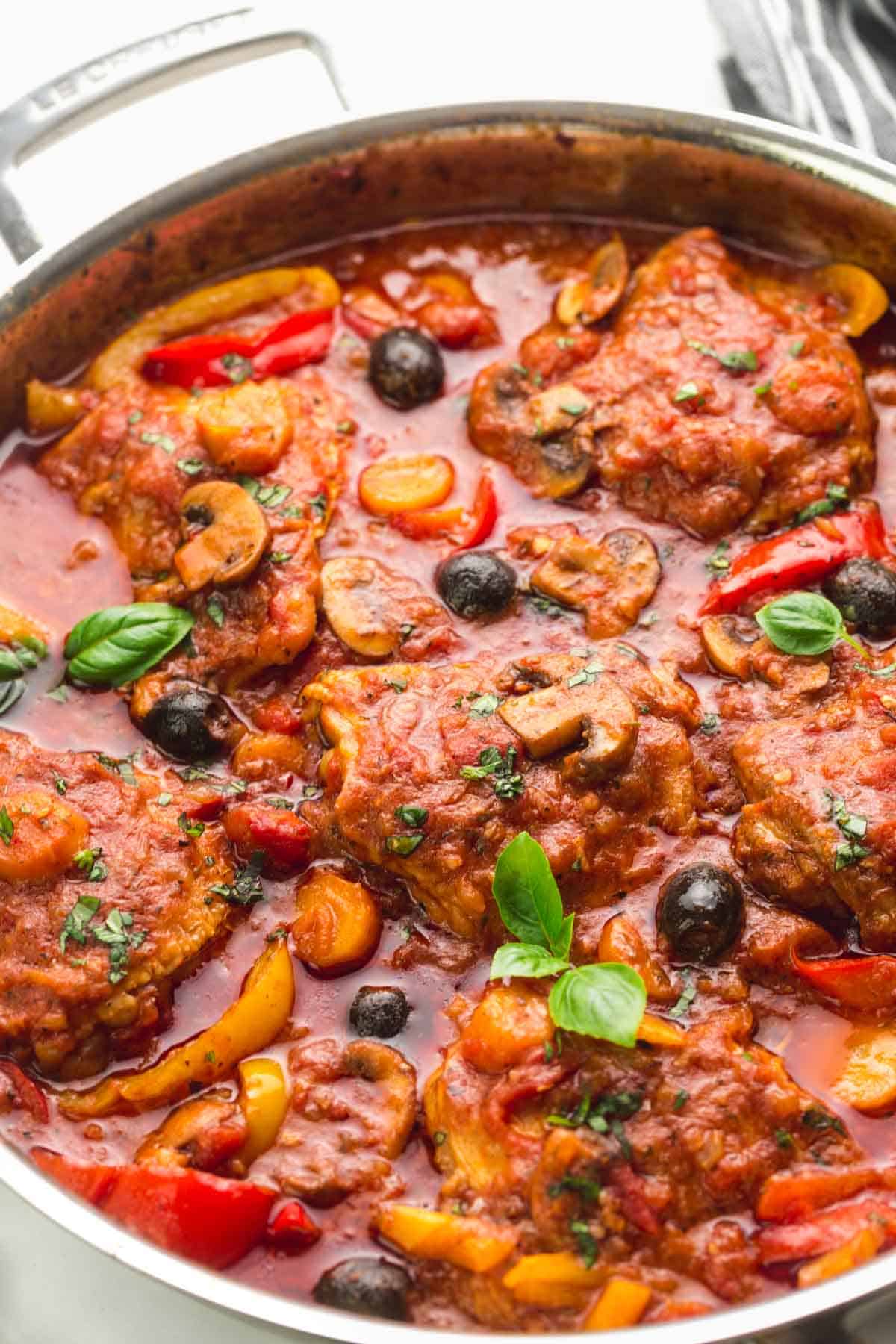
I like to keep things simple and serve chicken cacciatore with crusty bread or breadsticks to soak up the sauce. Creamy sour cream mashed potatoes, buttered noodles, or plain white rice are also delicious, while cauliflower rice or zucchini noodles work well when you want something lighter.
Storing Chicken Cacciatore
Store the chicken and sauce in an airtight container in the refrigerator for up to 3 days. Reheat gently in a covered skillet over low heat until hot throughout. Add a small splash of chicken broth or water if the sauce has thickened in the refrigerator.
Chicken cacciatore can also be frozen for up to 2 months. Thaw it overnight in the refrigerator before reheating.
The Right Pan for Chicken Cacciatore
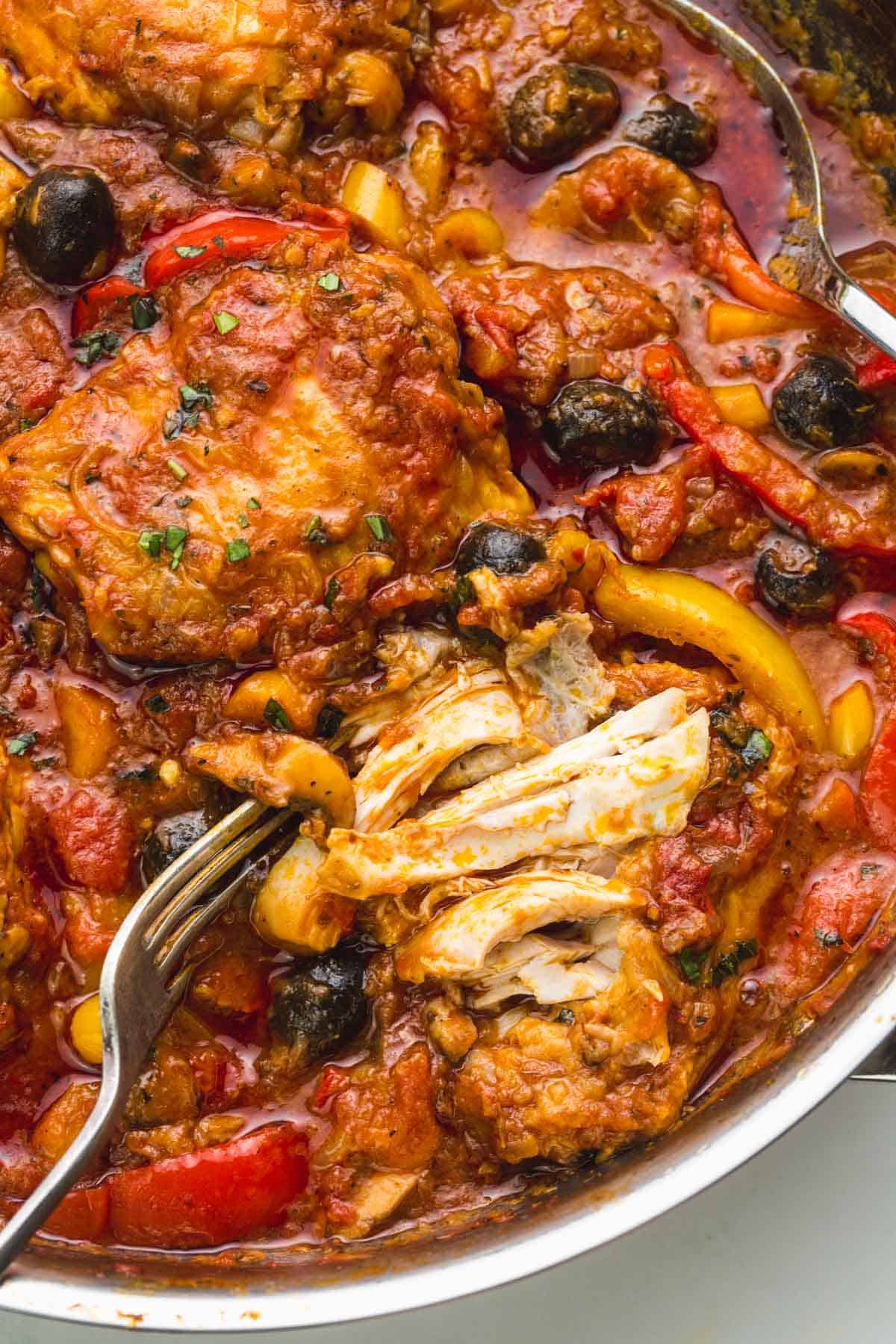
I use a wide stainless steel skillet for this recipe. It gives the chicken plenty of room to brown and works well for a tomato sauce that simmers for nearly an hour. I avoid uncoated cast iron for this long braise because the acidic tomato sauce can sometimes develop a metallic taste.
For another cozy one-pan chicken thigh dinner, try my baked chicken and rice.
Did you make this? Be sure to leave a review below and tag me on Facebook, Instagram, or Pinterest!
Chicken Cacciatore
Recipe Video
Equipment
- 12 inch stainless steel skillet with lid
- Shallow bowl
- Plate
- Tongs
- wooden spoon
Ingredients
- 6 bone-in skin-on chicken thighs approximately 1½ to 2 pounds (680 to 907 g) total
- 1¼ teaspoons salt divided
- ½ teaspoon ground black pepper divided
- ½ cup (60 g) all purpose flour
- 2 tablespoons (30 ml) olive oil
- 1 medium yellow onion diced
- 5 ounces (140 g) white button mushrooms cut into ¼ inch (6 mm) thick slices
- 1 medium carrot cut into ¼ inch (6 mm) thick slices
- 1 medium red bell pepper cut into strips
- 1 medium yellow bell pepper cut into strips
- 6 cloves garlic minced
- 1 teaspoon dried oregano
- 1 teaspoon dried thyme
- ½ teaspoon dried basil
- ½ cup (120 ml) dry red wine preferably Merlot
- 3 tablespoons (50 g) tomato paste
- 1 28-ounce can (800 g) diced tomatoes with their liquid
- ½ cup (70 g) pitted black olives drained
- ½ teaspoon crushed red pepper flakes optional
- Fresh basil leaves for serving
Instructions
- Season the chicken on both sides with 1 teaspoon of the salt and ¼ teaspoon of the ground black pepper. Dredge each thigh in the flour and shake off the excess.
- Heat the olive oil in a 12 inch stainless steel skillet over medium heat. Arrange all six chicken thighs in a single layer with the skin facing down.
- Cook the chicken for 3 to 4 minutes, or until the skin is golden brown. Turn and cook the second side for 3 to 4 minutes, then transfer the chicken to a plate.
- Add the onion, mushrooms, and carrot to the skillet. Cook for 3 to 4 minutes, stirring occasionally, until the onion is soft and translucent.
- Add the red bell pepper, yellow bell pepper, garlic, oregano, thyme, and basil. Cook for 3 minutes, until the peppers begin to soften and the garlic is fragrant.
- Pour in the red wine and scrape the bottom of the skillet to release the browned bits. Simmer for about 2 minutes, until the wine has visibly reduced.
- Stir in the tomato paste, diced tomatoes with their liquid, black olives, crushed red pepper flakes, remaining ¼ teaspoon salt, and remaining ¼ teaspoon ground black pepper. Bring the sauce to a gentle simmer.
- Return the chicken and any accumulated juices to the skillet with the skin facing up. Cover fully and reduce the heat to low.
- Simmer gently for 50 minutes. About every 15 minutes, briefly remove the lid and stir the sauce around the chicken without turning the thighs.
- Check that the chicken is very tender and registers approximately 185°F (85°C) in the thickest part without touching the bone. Continue cooking if needed until this temperature and tenderness are reached.
- Remove the lid and simmer for 5 minutes, or until the sauce reaches your preferred consistency. Taste and adjust the salt and ground black pepper as needed.
- Garnish with fresh basil leaves. Serve warm with bread, pasta, rice, or mashed potatoes.
Notes:
- Best Skillet: A stainless steel skillet works well for this long tomato-based braise. I avoid uncoated cast iron because prolonged contact with the acidic sauce can give it a metallic flavor.
- Wine: Merlot gives the sauce a rich flavor. Dry white wine can be used for a milder result.
- Without Wine: Replace the wine with an equal amount of low-sodium chicken broth, unsweetened grape juice, or apple juice. Chicken broth provides the most neutral result, while either juice will make the sauce slightly sweeter.
- Black Olives: Use any variety of pitted black olives you prefer.
- Optional Celery: One chopped celery stalk can be added with the carrot. I sometimes include it in this recipe.
- Chicken Doneness: Chicken thigh sizes vary, so use the internal temperature and tenderness cues rather than relying only on cooking time.
- Storage and Reheating: Store cooled chicken cacciatore with its sauce in an airtight container in the refrigerator for up to 3 days. Reheat gently in a covered skillet over low heat until hot throughout. Add a small splash of chicken broth if the sauce is too thick.
- Freezing: Freeze the chicken and sauce in a freezer-safe container for up to 2 months. Thaw overnight in the refrigerator before reheating.
Nutrition Information
This website provides approximate nutrition information for convenience and as a courtesy only. Nutrition data is gathered primarily from the USDA Food Composition Database, whenever available, or otherwise other online calculators.
© Little Sunny Kitchen

Jennifer says
This is my first time adding my comment ever and I have to say I’ve used this recipe many times and need to say I cook every day and this recipe is beautiful!Thank you so much!My sister who has had a stroke can’t eat much but loves this recipe and I’m blessed to cook it for her! It is perfect just the way it is
Little Sunny Kitchen says
Hi Jennifer, thank you so much for stopping back with such kind words about my recipe. I’m so glad that you’ve found something that your sister loves so much.
anna F cortez says
can I use kalamata olives .
Little Sunny Kitchen says
Sure! Just keep in mind that kalamata olives have a strong flavor, which will come through in the sauce.
Marlaine Dennehy says
I just made this recipe and it’s delicious. Thank you. I followed it to the end except I used white wine.
Little Sunny Kitchen says
Thanks Marlaine! It’s good to know that the recipe works with that substitution.
Jack says
perfect
DENISE HURST says
I have made this recipe before and it is delicious; as a matter of fact anything Italian tastes delicious, yummy.
Little Sunny Kitchen says
I agree, Italian food is definitely some of the best in the world. So glad you like this recipe!