
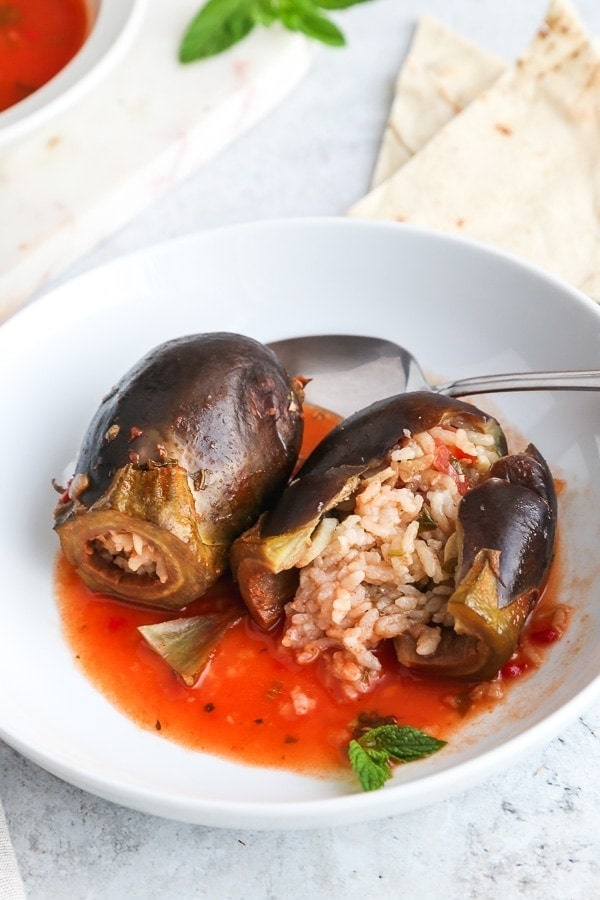
Kousa mahshi is tender zucchini stuffed with spiced rice and ground meat, then simmered in tomato sauce. My mom’s version keeps the filling simple, with no onion to chop or fresh herbs to prepare. Garlic and dried mint sizzled in butter go into the pot for the last 15 minutes, adding even more flavor to the sauce. I love mine with a spoonful of plain yogurt.


Kousa Mahshi – The Way I Grew Up Eating It
This is my mom’s kousa mahshi, with a simple filling of rice, ground beef or lamb, finely diced tomato, and 7 spice blend. The finishing touch is the ta’leyeh: garlic and dried mint cooked briefly in butter, then poured into the pot for the last 15 minutes.
It’s a small extra step that adds so much flavor. The garlic mellows as it simmers, and the mint seasons the tomato sauce without taking over. For me, that sauce is just as much a part of the meal as the stuffed zucchini.
What Is Kousa Mahshi?
Kousa mahshi means stuffed zucchini in Arabic. Small zucchini are hollowed out, filled with rice and meat, and simmered whole. The rice cooks inside the zucchini, absorbing flavor from the meat, spices, and cooking liquid.
You may know it as Lebanese stuffed zucchini, but versions are made throughout the Levant, including Jordan, Palestine, Lebanon, and Syria. The filling and sauce vary between households. This recipe uses a tomato sauce and a garlic and mint butter finish.
Which Zucchini to Use (and Where to Find It)
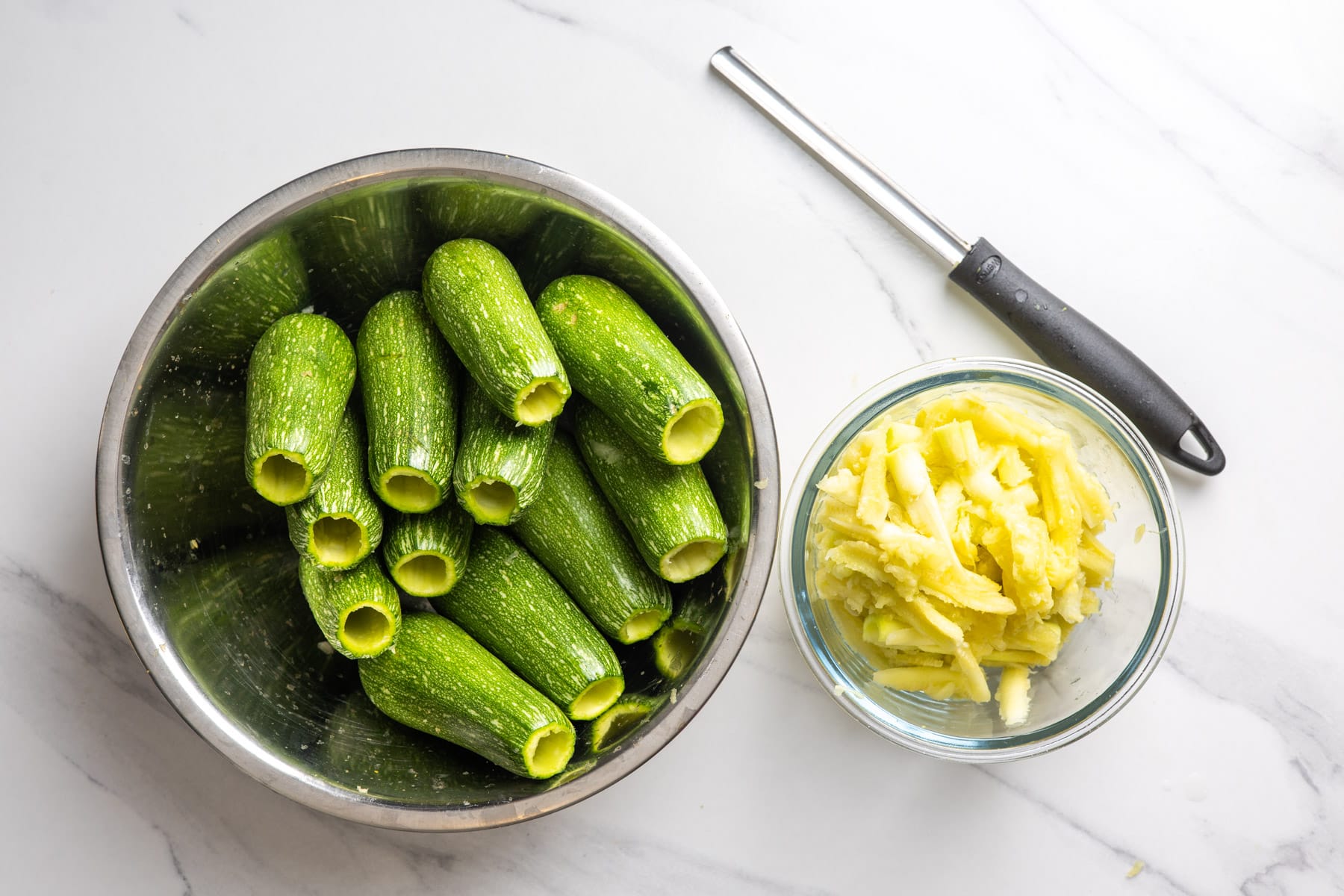
Look for small Middle Eastern zucchini with a short, fairly straight shape and enough width to hollow out. They usually have pale green or lightly speckled skin. Choose firm zucchini of similar sizes so they cook evenly, and avoid very narrow ones that will be difficult to core.
In the US, start with Middle Eastern grocery stores. Mexican gray squash, sometimes labeled gray zucchini, is another suitable option available at some supermarkets and Latino grocery stores. You may also see Lebanese zucchini or Magda squash. Check the shape and size as well as the label.
For this recipe, you’ll need about 20 small zucchini, weighing approximately 4½ pounds (2 kg) before coring. The number will vary with their size.
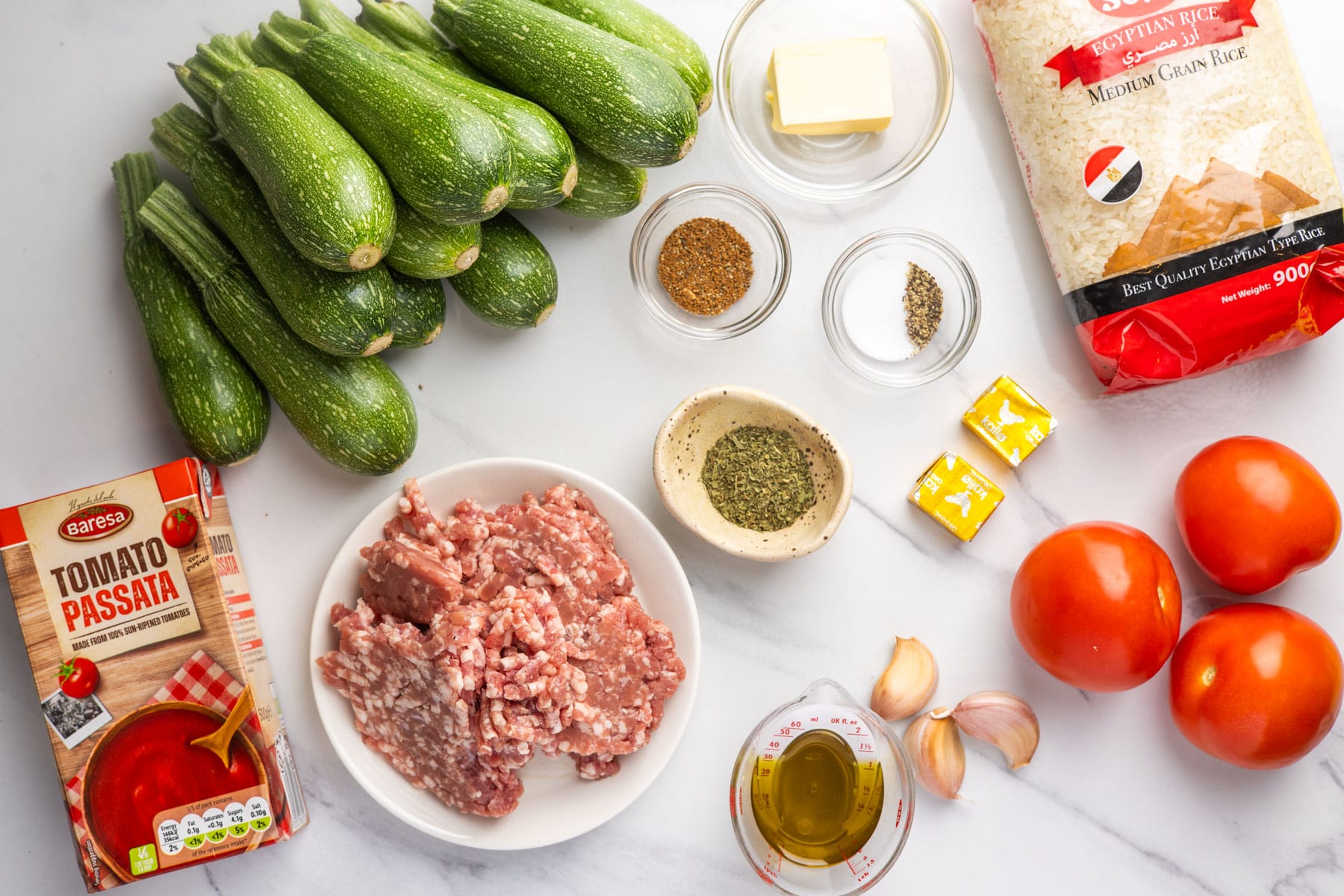
Ingredient Notes
- Rice: I use Egyptian rice, which has short grains that work well in the filling. Another short or medium-grain white rice can be used. Rinse the rice well and drain it thoroughly before mixing. It goes into the filling raw, with no soaking or precooking. Leave room inside each zucchini for the grains to expand as they absorb the sauce. Brown rice needs a different cooking time, so it isn’t a direct substitute here.
- Ground Beef or Lamb: Either ground beef or ground lamb works in this recipe. Beef gives the filling a milder flavor, while lamb tastes richer and more pronounced. The meat goes into the filling raw. Mix it thoroughly with the rice so it is evenly distributed, without large clumps.
- 7 Spice aka Baharat, is an Arabic spice blend that adds warm, savory flavor to the filling.
- Ghee or Butter: Adds buttery flavor and richness to the filling. Unsalted butter works in place of ghee. If either is firm, melt it gently and let it cool before mixing it with the raw meat. Neutral oil also works, using the amount listed in the recipe card. The butter/ghee for the ta’leyeh is separate and goes into the pot near the end of cooking.
- Tomato Sauce and Stock Cubes: Use plain canned tomato sauce, rather than pasta sauce with added herbs or a concentrated tomato paste. Smooth passata is the closest equivalent if you’re shopping in the UK. The chicken stock cubes season the cooking liquid. Their saltiness varies considerably, so taste the sauce before adding the raw stuffed zucchini and adjust the sauce’s added salt if needed.
- Dried Mint gives the ta’leyeh its distinctive flavor. Rub it between your fingers as you add it to break up any larger leaves. Have it ready before you cook the garlic, as this step moves quickly. The garlic should become fragrant without browning, and the mint only needs a brief stir in the butter before everything goes into the pot.
How to Core Zucchini
A zucchini corer, also called a manakra, makes this much easier. Its narrow blade fits through the opening and removes the flesh while leaving the zucchini whole. Some people use an apple corer instead. I haven’t tried one for kousa, but it may be an option if you don’t have a manakra.
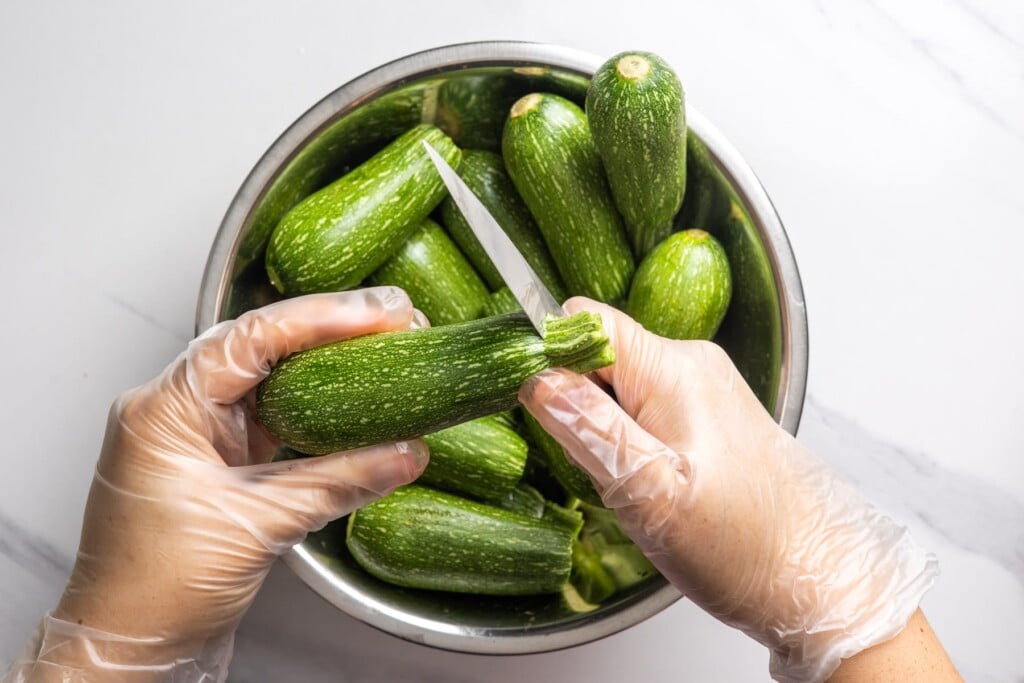
1. Trim the zucchini. Wash the zucchini. Using a small paring knife, trim off the stem ends, then shave a very thin slice off the rounded bottom of each one, just the tip, so the end stays closed. Before inserting the corer, hold it alongside a zucchini to judge how far it can go without reaching the bottom.
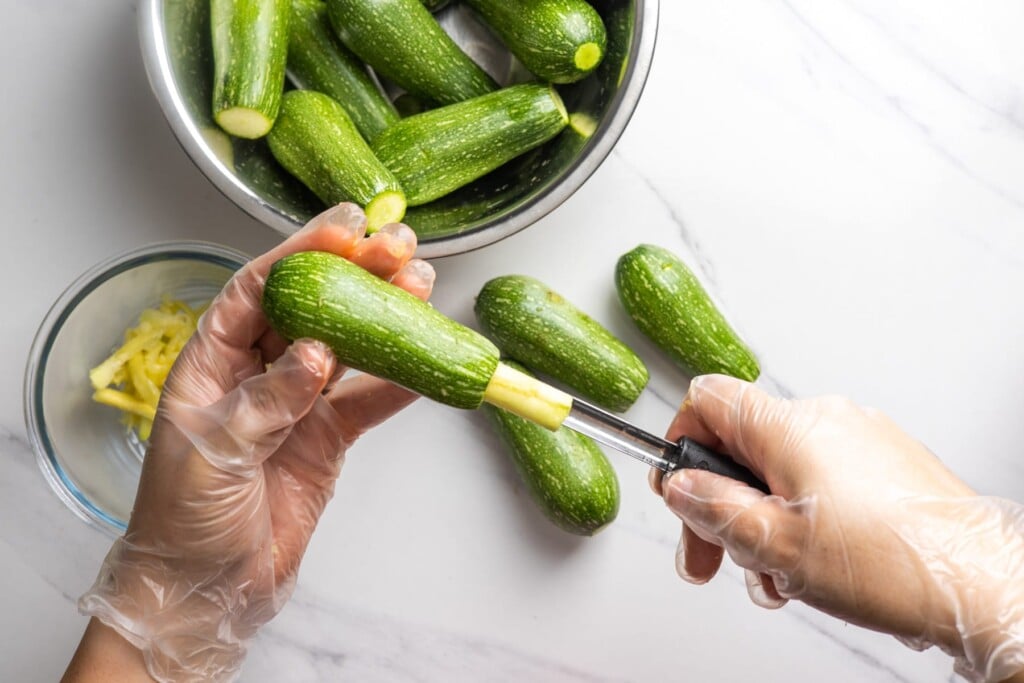
2. Hollow out the centers. Hold the zucchini gently in one hand and insert the corer into the center of the cut end. Twist to loosen a little flesh, then pull it out. Continue removing small amounts, gradually working around the inside.
Aim for an even shell about ¼ inch (6 mm) thick. You need room for the filling, but the sides should still feel sturdy enough to handle. Avoid forcing the tool or squeezing the zucchini tightly.
If you make a small hole, plug it with a little piece of the scooped-out core, and handle that zucchini gently when filling and placing it in the pot. If a zucchini splits badly, set it aside to cook with the cores instead.
How to Make Kousa Mahshi
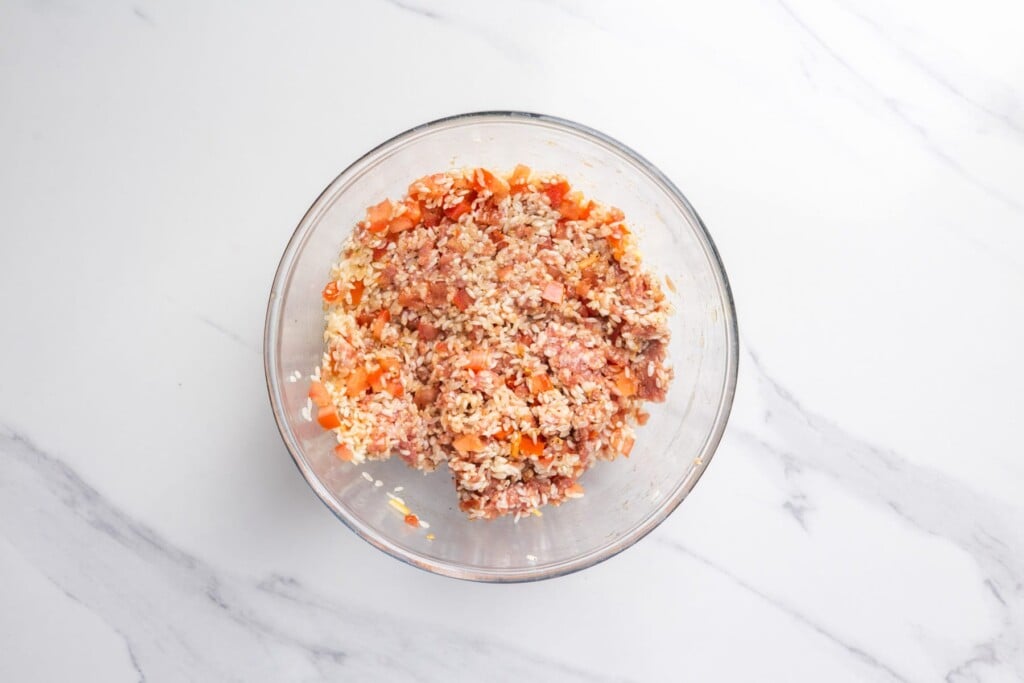
1. Mix the filling. Rinse and thoroughly drain the rice. Mix it with the raw ground meat, finely diced tomato, ghee or oil, salt, 7-spice blend, and black pepper until evenly combined.

2. Fill the kousa. Add the filling in small amounts, leaving each zucchini about ¾ full. Keep it loose rather than pressing it down, as tightly packed rice won’t have enough room to expand.

3. Add the tomato pieces. If using, tuck a small piece of tomato into each opening to help hold the filling inside. Don’t push it down into the rice.
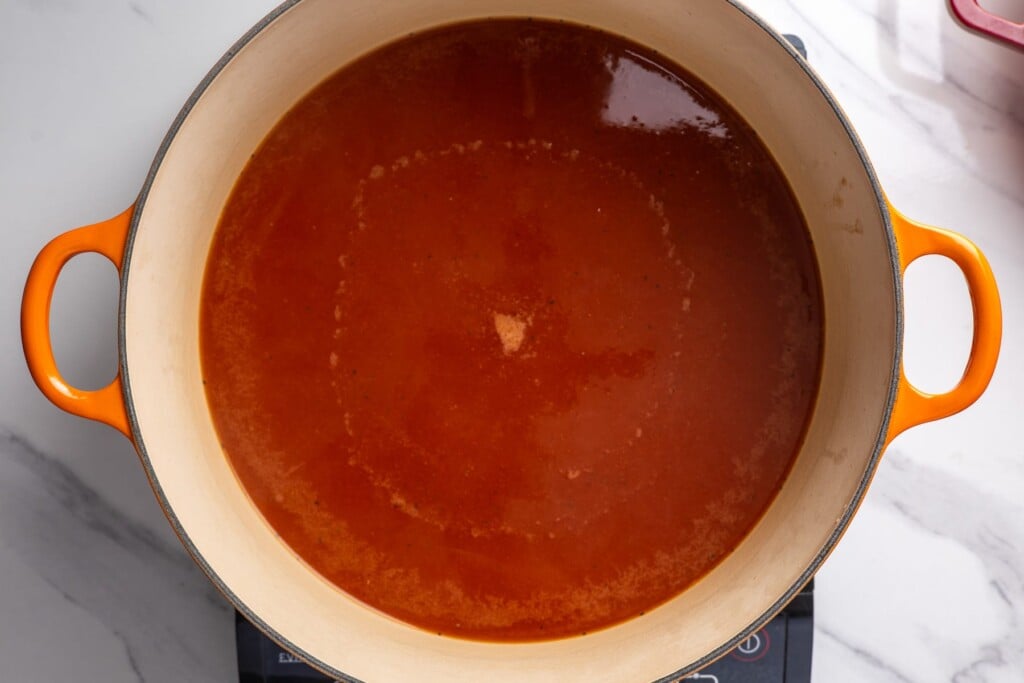
4. Make the tomato sauce. Combine the tomato sauce, water, chicken stock cubes, salt, and black pepper in a large, deep pot. Taste and adjust the seasoning before adding the stuffed zucchini.
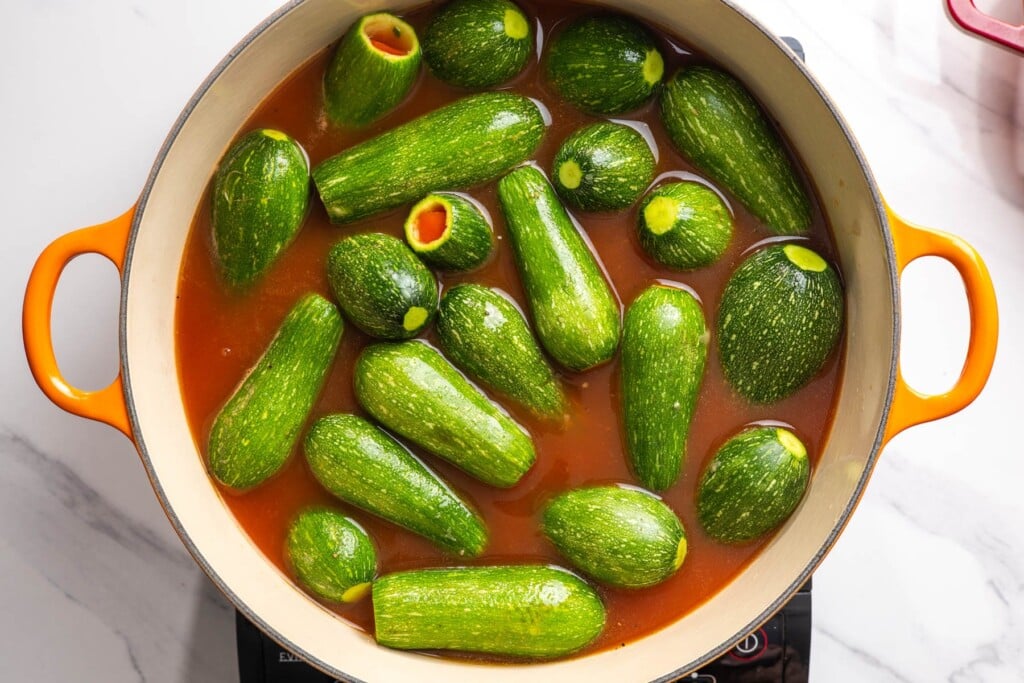
5. Arrange the kousa. Carefully lower the stuffed zucchini into the sauce, fitting them snugly together without crushing them. Choose a pot that holds them comfortably without leaving lots of empty space. The sauce should almost cover them.
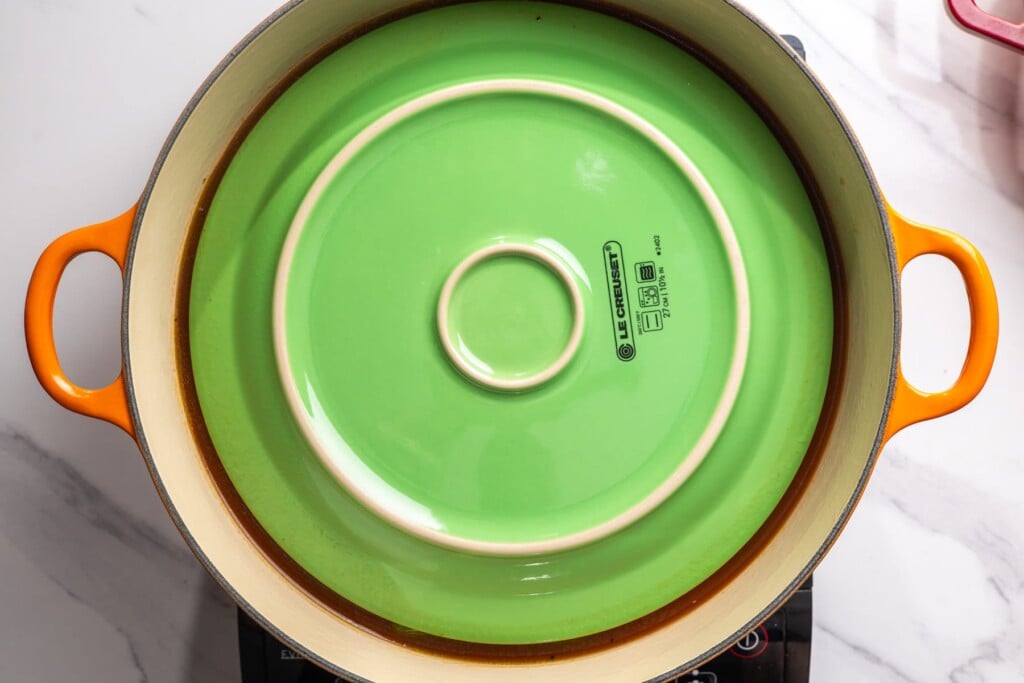
6. Add a plate. Set a heatproof plate upside down over the zucchini to help keep them from floating and moving around. Use one that fits inside the pot with room around the edges.
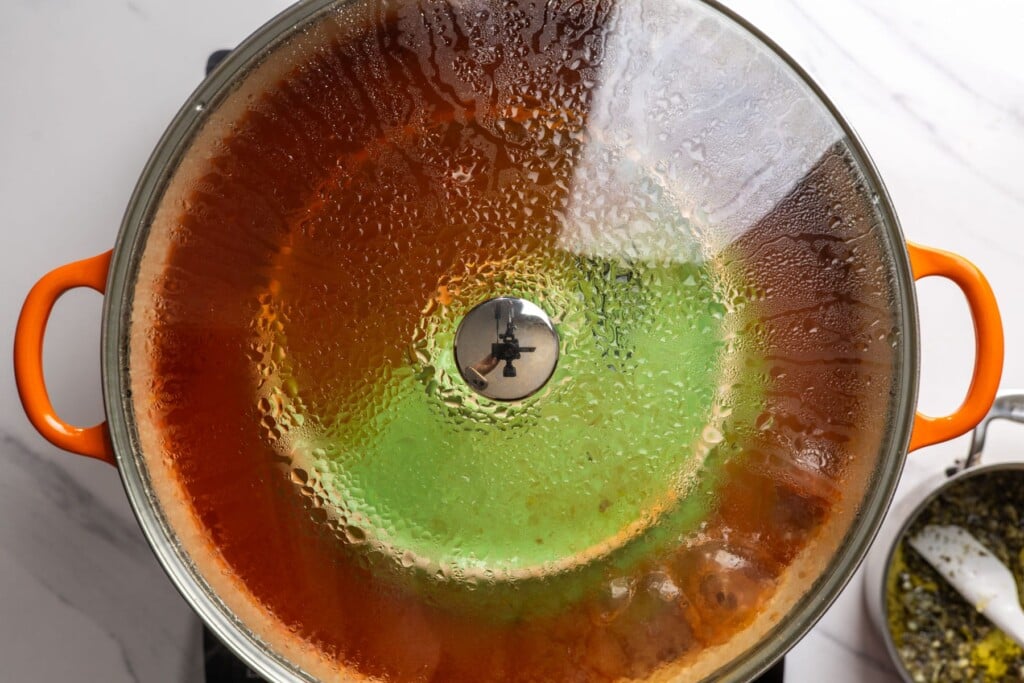
9. Cover and simmer. Bring the sauce to a boil, then reduce the heat to maintain a gentle simmer. Cover the pot and cook for 45 minutes, avoiding a vigorous boil that could split the zucchini.
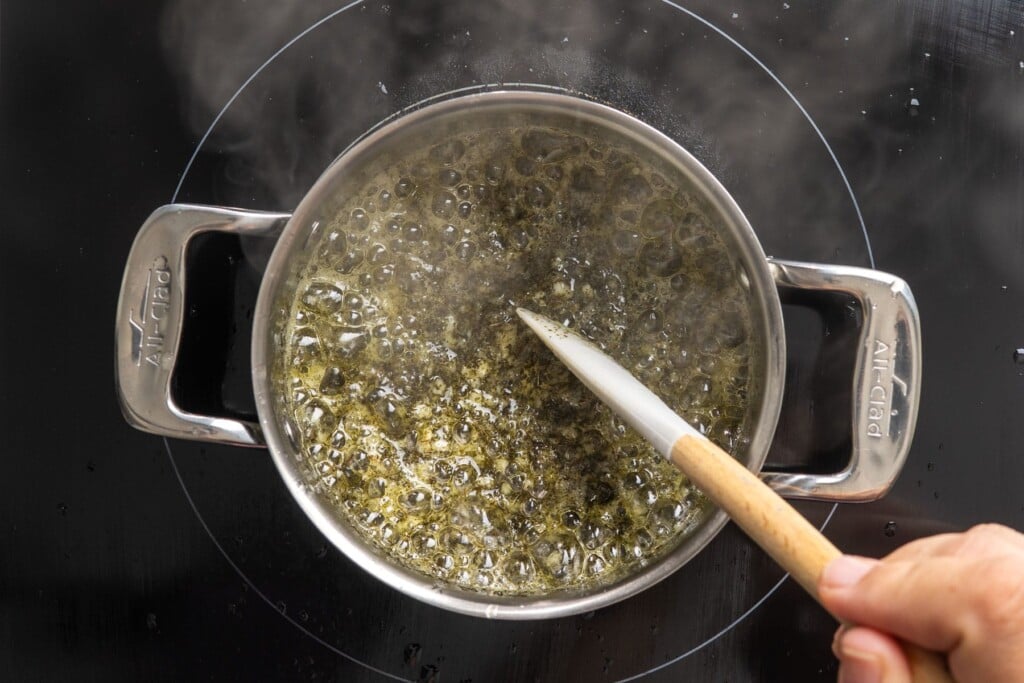
10. Make the ta’leyeh. Near the end of the 45 minutes, melt the butter or ghee in a small skillet over medium low heat. Cook the garlic briefly until fragrant, then stir in the dried mint.
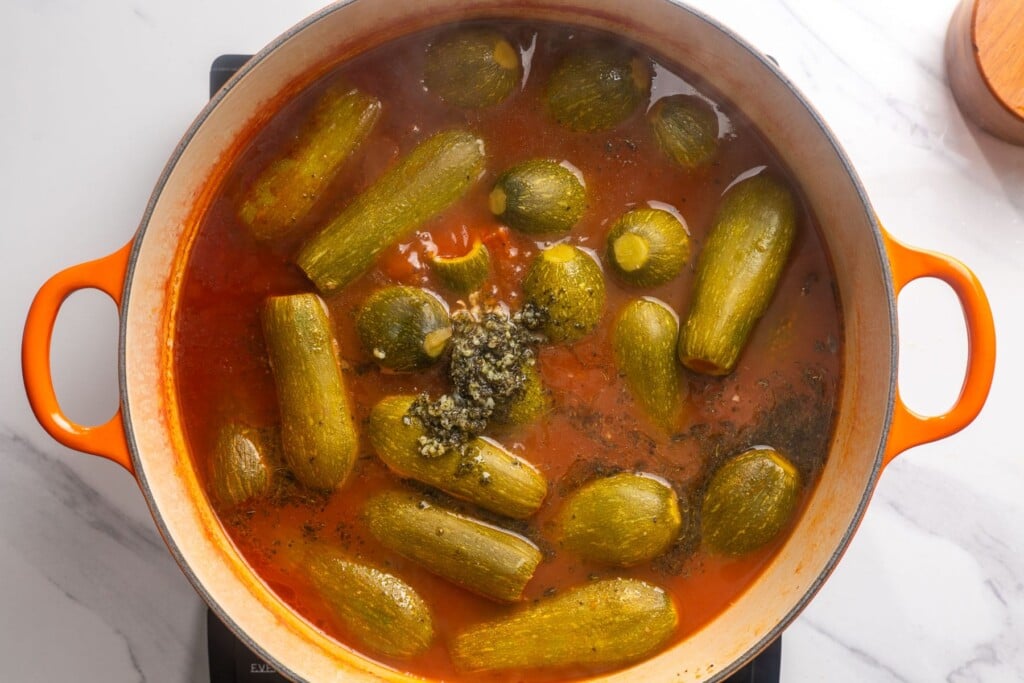
11. Add the garlic and mint butter. Carefully remove the pot lid and the hot plate with suitable utensils. Pour the ta’leyeh into the sauce.
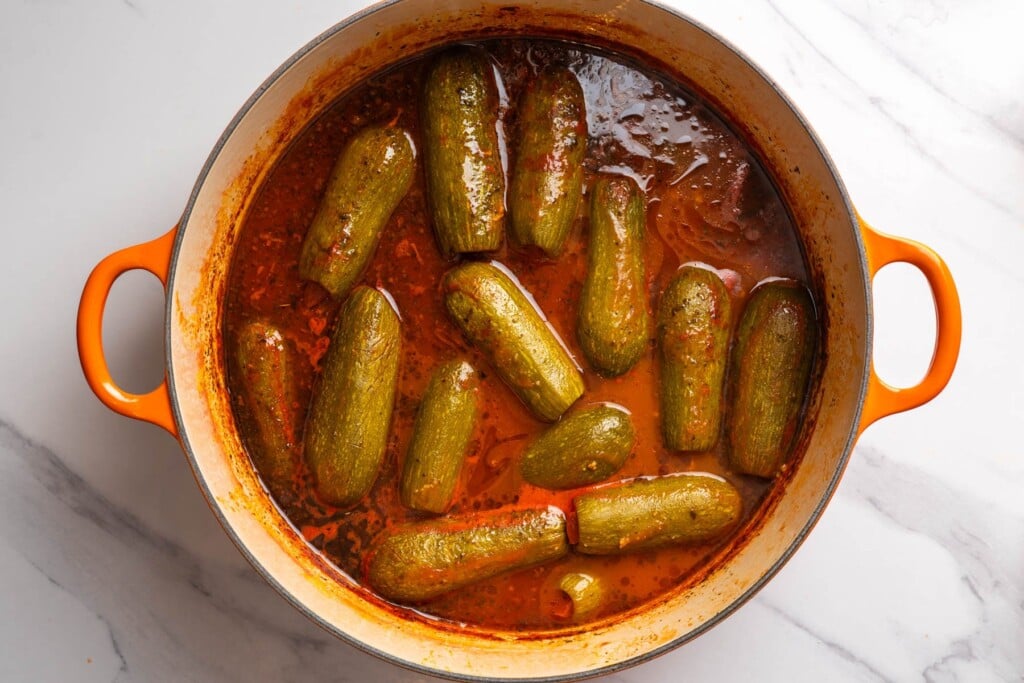
12. Finish. Simmer uncovered for another 15 minutes, or until the zucchini are tender and the rice is fully cooked. The sauce will thicken just slightly. If it still looks thin, let it simmer a little longer.
How to Tell When Kousa Mahshi Is Done
Check both the zucchini and the filling. A knife should slide easily through the squash, and the rice in the center should be tender with no hard or chalky bite.
Check the center of the meat filling with an instant read thermometer. Ground beef or lamb should reach at least 160°F (71°C). Temperature alone won’t tell you whether the rice is ready, so check its texture too.
If the rice is still firm, continue simmering and check again. Keep enough sauce in the pot for the zucchini to continue cooking, adding a little hot water if the liquid has reduced too much.
Did you make this? Be sure to leave a review below and tag me on Facebook, Instagram, or Pinterest!

Kousa Mahshi (Levantine Stuffed Zucchini)
Ingredients
For the Kousa and Filling
- 20 small kousa about 4½ pounds (2 kg), weighed before coring
- 1 cup Egyptian rice (200 g), or another short or medium grain white rice
- 8 ounces ground beef or ground lamb (225 g)
- 1 cup tomato (180 g), finely diced
- 2 tablespoons ghee or unsalted butter (30 g), or 2 tablespoons (30 ml) neutral oil
- 1 teaspoon kosher salt
- ¾ teaspoon baharat or Arabic 7 spice
- ¼ teaspoon ground black pepper
- tomato small pieces, for covering the openings (optional)
For the Tomato Sauce
- 15 ounces tomato sauce (425 g)
- 5 cups water (1.2 liters)
- 2 low-sodium chicken stock cubes
- 1 teaspoon kosher salt
- ¼ teaspoon ground black pepper
For the Garlic Mint Ta’leyeh (Garlic Butter Topping)
- 2 tablespoons unsalted butter (28 g)
- 2 cloves garlic crushed or minced
- 1 teaspoon dried mint
Instructions
- Core the kousa. Wash the kousa and trim off the stem ends. Using a zucchini corer, carefully hollow out each one, leaving the bottom intact and taking care not to pierce the sides.
- Prepare the filling. Rinse the rice well under cold water and drain thoroughly. Add it to a large bowl with the ground meat, diced tomato, ghee, butter or oil, salt, baharat, and black pepper. Mix until evenly combined.
- Stuff the kousa. Loosely fill each kousa about ¾ full with the rice and meat mixture. Do not pack the filling tightly because the rice will expand as it cooks. If desired, cover each opening with a small piece of tomato to help keep the filling inside.
- Make the tomato sauce. In a large, deep pot, combine the tomato sauce, water, chicken stock cubes, salt, and black pepper.
- Add the kousa. Carefully lower the stuffed kousa into the sauce, fitting them snugly together without crushing them. The sauce should almost cover them.
- Cook. Set a heatproof plate upside down on top of the kousa to keep them under the sauce. Bring to a boil over medium-high heat. Cover, reduce the heat to maintain a gentle simmer, and cook for 45 minutes.
- Make the ta’leyeh. Melt the butter in a small skillet over medium-low heat. Add the garlic and cook for about 30 seconds, until fragrant, taking care not to brown it. Stir in the dried mint.
- Finish the kousa. Carefully remove the plate and pour the garlic-mint ta’leyeh over the kousa. Leave the pot uncovered and continue cooking for another 15 minutes, or until the kousa are tender and the rice is fully cooked. The sauce will thicken just slightly. If it still looks thin, let it simmer a little longer.
- Serve. Remove from the heat and let the kousa rest for 10 minutes. Serve warm with plenty of the tomato sauce spooned over the top.
Notes:
- Kousa: Look for small, pale-green Middle Eastern zucchini, sometimes sold as Lebanese zucchini, Mexican gray squash, or Magda squash.
- Rice: Egyptian rice works especially well. Another short or medium grain white rice can be substituted.
- Do not overfill: Filling the kousa about ¾ full gives the rice enough space to expand.
- Cooking liquid: The kousa should cook in plenty of liquid. If your pot is especially wide and the liquid reduces too quickly, add a little hot water as needed.
- Doneness: The squash should be very tender and the rice in the center completely cooked. Ground beef or lamb should reach 160°F (71°C) in the center.
- Leftovers: Refrigerate in an airtight container for 3 to 4 days. Reheat gently with some of the tomato sauce.
- Servings: Plan on 2 to 3 kousa per person.
- Freezing: Let the cooked kousa cool, then freeze them with their sauce in airtight containers for up to 3 months. Thaw overnight in the refrigerator and reheat gently.
- Vegetarian: Leave out the meat, add one more diced tomato and some chopped fresh parsley to the filling, plus fresh mint if you like. Use vegetable stock cubes.
Nutrition Information
This website provides approximate nutrition information for convenience and as a courtesy only. Nutrition data is gathered primarily from the USDA Food Composition Database, whenever available, or otherwise other online calculators.
© Little Sunny Kitchen
What to Do With the Zucchini Cores
Keep the flesh you scoop out! I sauté the zucchini cores with garlic and use them in place of the eggplant in mutabbal for a creamy zucchini dip. My cousin taught me this, and now I do this every time I cook Kousa.
You can also sauté them with olive oil, onion or garlic, and a little salt for a simple side. Let the excess moisture cook off, then serve as is with fresh pita bread, or stir in beaten eggs for a scramble.
What to Serve With Kousa Mahshi
Serve the kousa in shallow bowls with plenty of tomato sauce, about 2 to 3 kousa per person. The rice and meat filling makes this a complete main dish, so a few simple sides are enough.
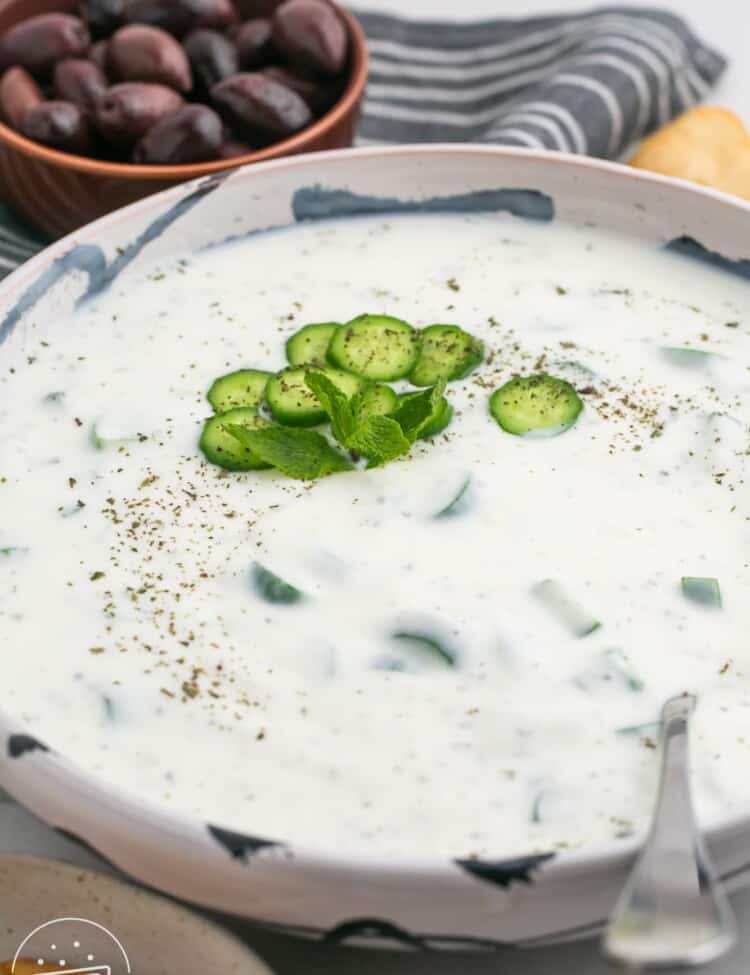
Plain yogurt adds a cool, tangy contrast to the warm tomato sauce. Pita is useful for soaking up the sauce, and a cucumber and tomato salad adds something crisp alongside the tender zucchini.
Storing and Reheating
- Refrigerator: Transfer leftovers and their sauce to shallow airtight containers and refrigerate within 2 hours of cooking. Keep for 3 to 4 days.
- Stovetop: Place the kousa in a saucepan with some sauce, cover, and heat gently until the filling reaches 165°F (74°C). Add a splash of water if needed, and avoid stirring roughly because the cooked zucchini are fragile.
- Microwave: Place a portion in a microwave-safe dish with sauce and cover loosely. Heat in short intervals until hot throughout, checking that the center reaches 165°F (74°C).
Kousa Mahshi FAQs
Kousa means zucchini or squash, and mahshi means stuffed. You may also see the name written as koosa mahshi or kusa mahshi.
Kousa is the Arabic word for zucchini. In recipes like this one, it usually refers to the small Middle Eastern varieties, which tend to be shorter and wider than the long, dark green zucchini common in US supermarkets.
Small regular zucchini can be hollowed out and stuffed, though narrow or curved ones are harder to core. Choose straight zucchini with enough width for the filling. The cooking time may vary with their size; the timing in this recipe is for small kousa.
Coring takes the most practice, but the filling and sauce are straightforward. Work slowly on the first few zucchini and remove a little flesh at a time. Once they’re filled, most of the remaining cooking time is a gentle simmer.
You can cook the kousa ahead and refrigerate it with its sauce, following the storage instructions above. Reheat gently so the zucchini stay intact. This also lets you finish the coring and stuffing before the day you plan to serve it.
Yes. Leave out the meat, add one more diced tomato to the filling, and stir in chopped fresh parsley. Fresh mint is a nice addition too. Use vegetable stock cubes in place of the chicken stock cubes to keep it fully vegetarian.
More Middle Eastern Recipes to Try
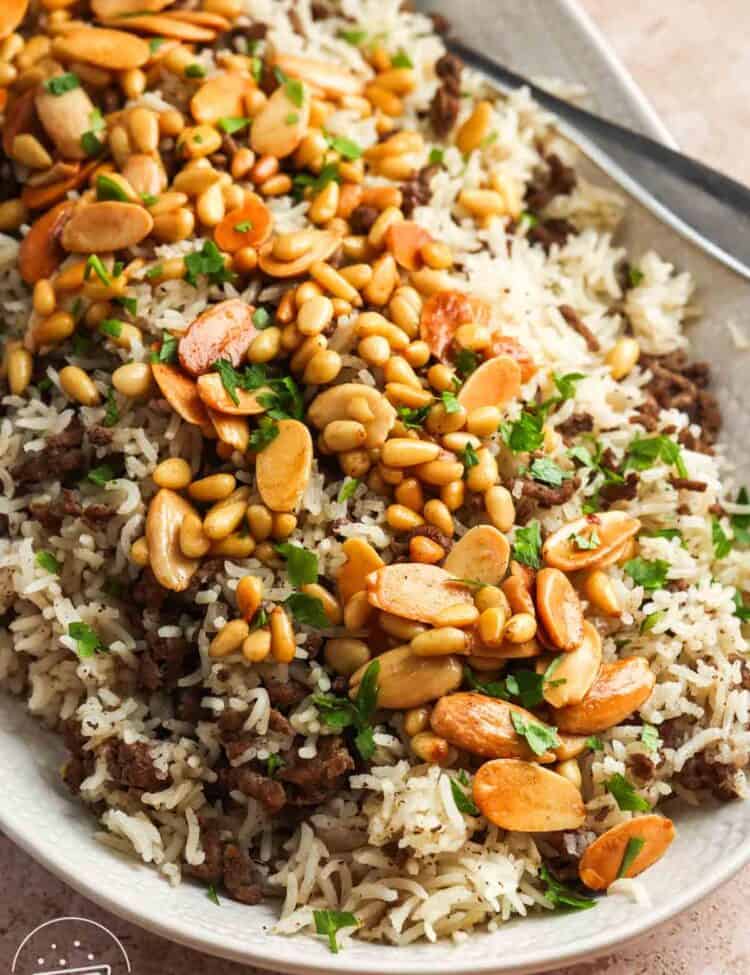
If you like the rice and spiced meat filling in kousa mahshi, try my Hashweh Rice. It brings those flavors together in a rice dish without any coring or stuffing.
For another family style meal, make Maqluba, with layers of chicken, vegetables, and rice turned out onto a serving platter.


Leave a Review!