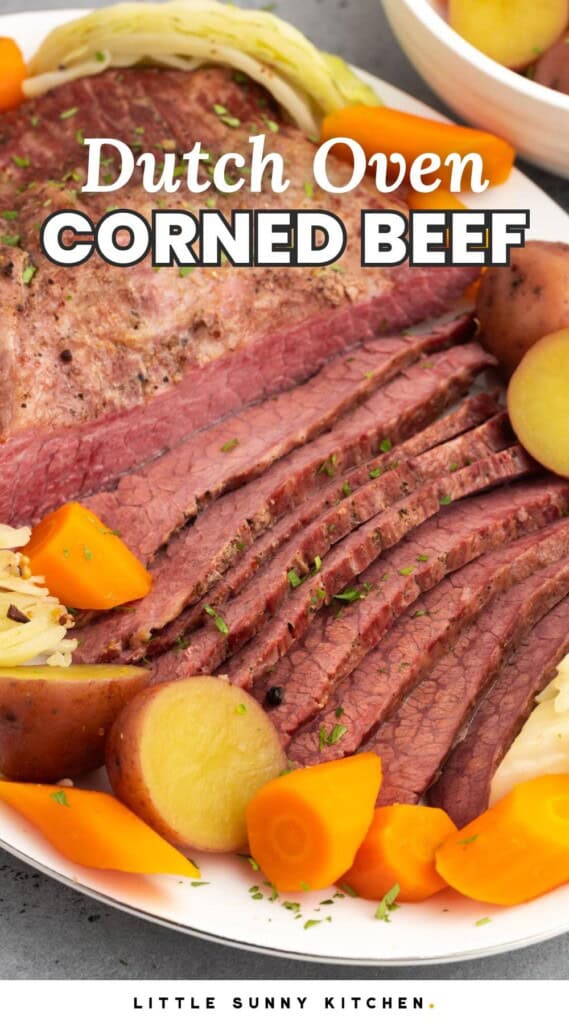
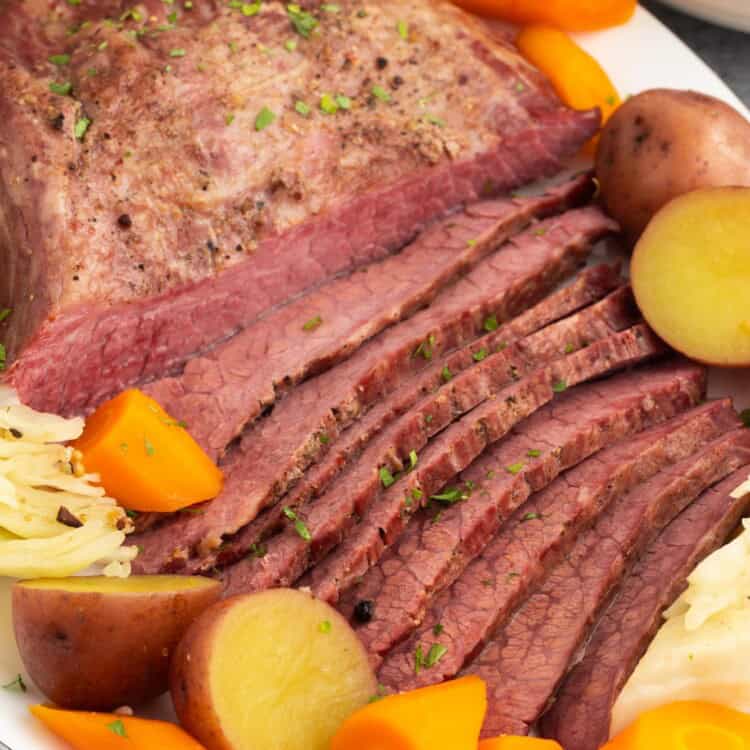
This Dutch oven corned beef is cooked low and slow on the stovetop until the brisket is tender enough to slice thinly, then finished with potatoes, carrots, and cabbage simmered in the same cooking liquid. It is an easy one-pot meal for St. Patrick’s Day or any time you want a corned beef dinner that turns out well.
Prefer a faster method? Try my Instant Pot corned beef.
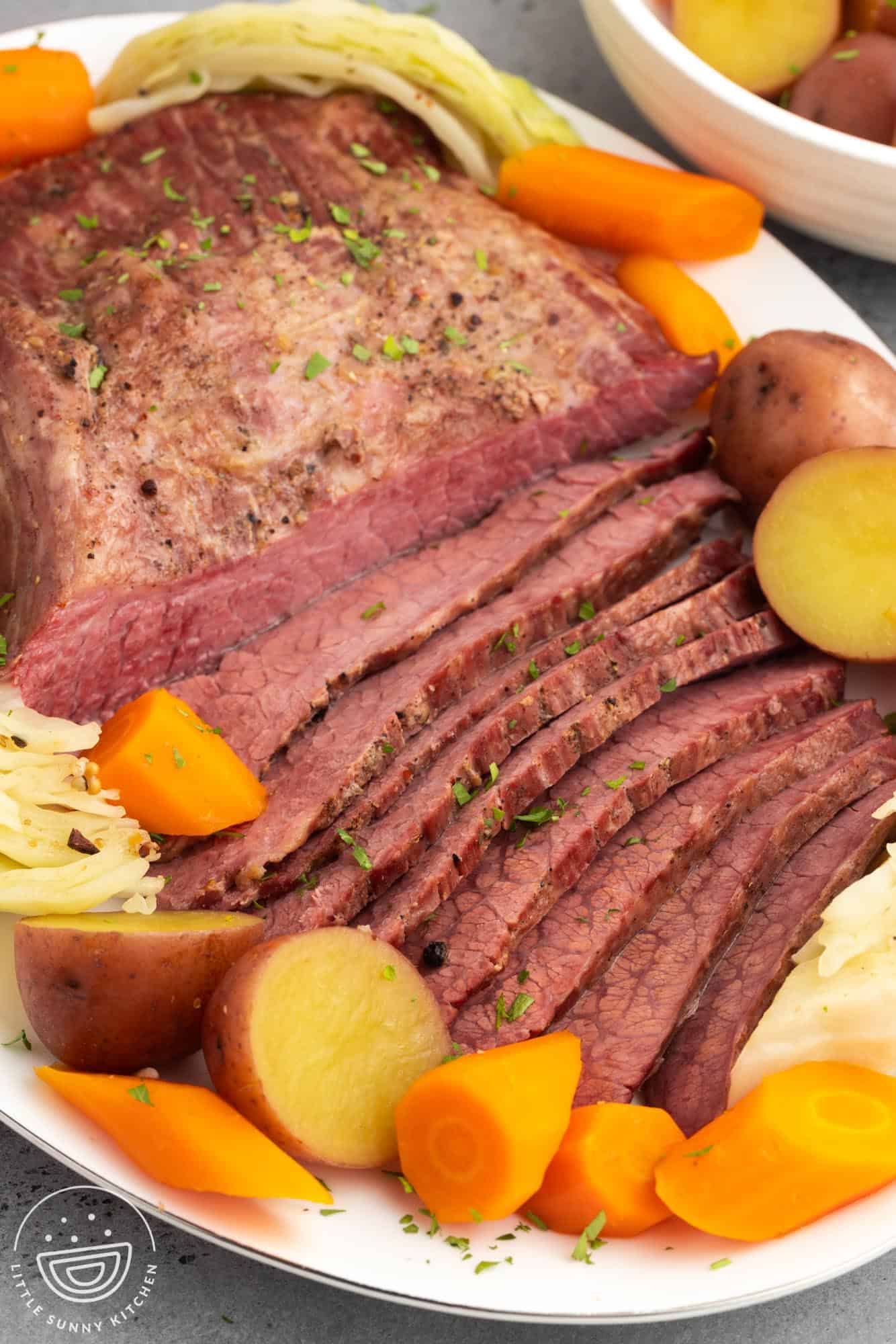
Why I Cook Corned Beef on the Stovetop
- A cast-iron dutch oven is one of the easiest ways to cook corned beef because it holds heat well and keeps the brisket at a gentle simmer. That steady heat is especially helpful for a flat cut brisket, which can dry out if it cooks too aggressively.
- I also like adding the vegetables at the end instead of cooking everything together from the start. The corned beef gets time to turn tender first, and the potatoes, carrots, and cabbage stay intact instead of going too soft.
- It also keeps the whole recipe simple. Once the brisket is done, all you need to do is rest it, slice it, and ladle some of the broth over the meat and vegetables before serving. The bottom of the dutch oven holds heat well, so the cooking liquid stays hot while the vegetables finish.
Ingredient Notes That Matter
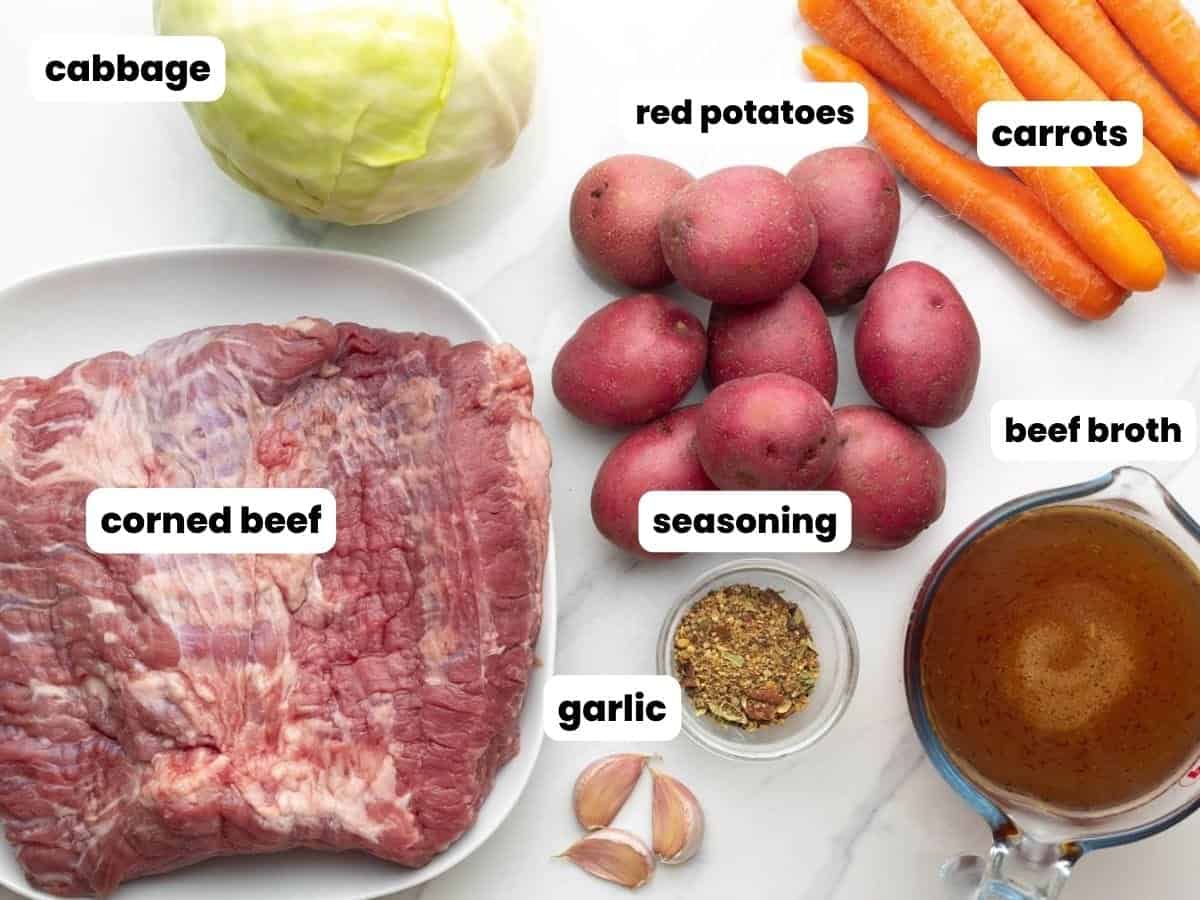
Complete list of ingredients and amounts can be found in the recipe card below.
- Corned Beef Brisket: Use a brisket that is around 2.5 lbs so the timing in this recipe stays accurate and the meat fits comfortably in your Dutch oven. I use a flat cut here because it slices neatly, but a point cut brisket or point cut will also work if that is what you have.
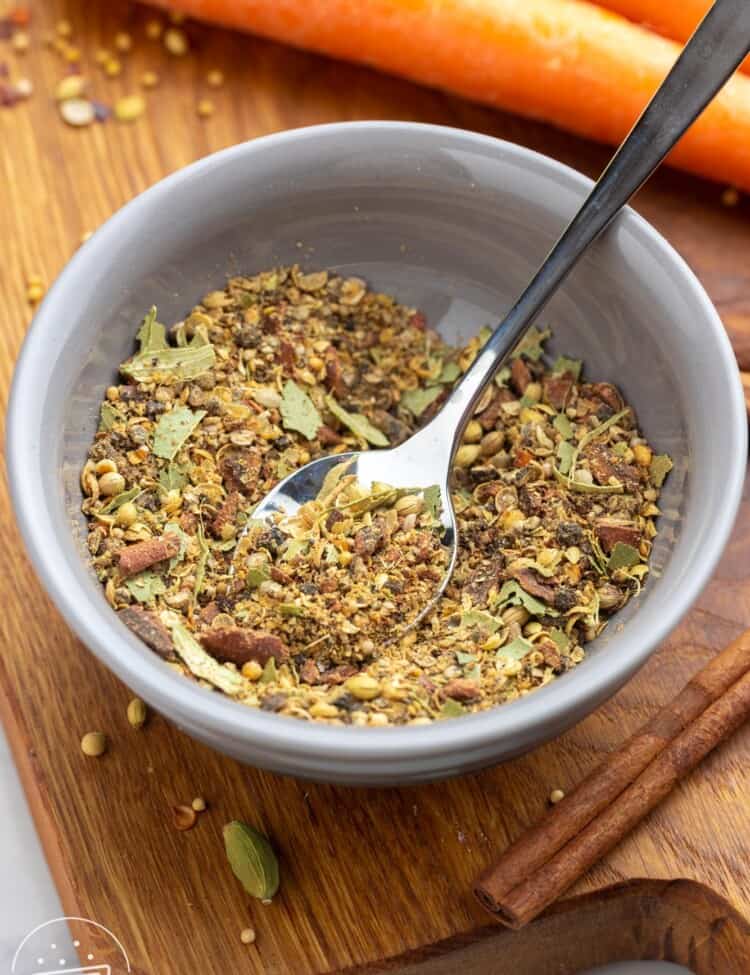
- Corned Beef Seasoning: Most corned beef comes with a seasoning packet, and that works well. You can also use homemade corned beef seasoning if you prefer. Pickling spices are traditional here, and I sometimes add a bay leaf and a little black pepper for extra flavor.
- Cooking Liquid: Beef broth is the main cooking liquid in this recipe, and it gives the meat and vegetables plenty of flavor. If you want, you can replace part of the broth with Guinness or another dark beer, but the recipe works very well with broth alone. Because corned beef is already well seasoned from the brining process, I like using low-sodium beef broth here.
- Vegetables: Baby red or yellow potatoes hold their shape best. Carrots and sliced cabbage round out the meal, and the garlic adds extra flavor to the broth while the brisket cooks.
How To Cook Corned Beef Brisket
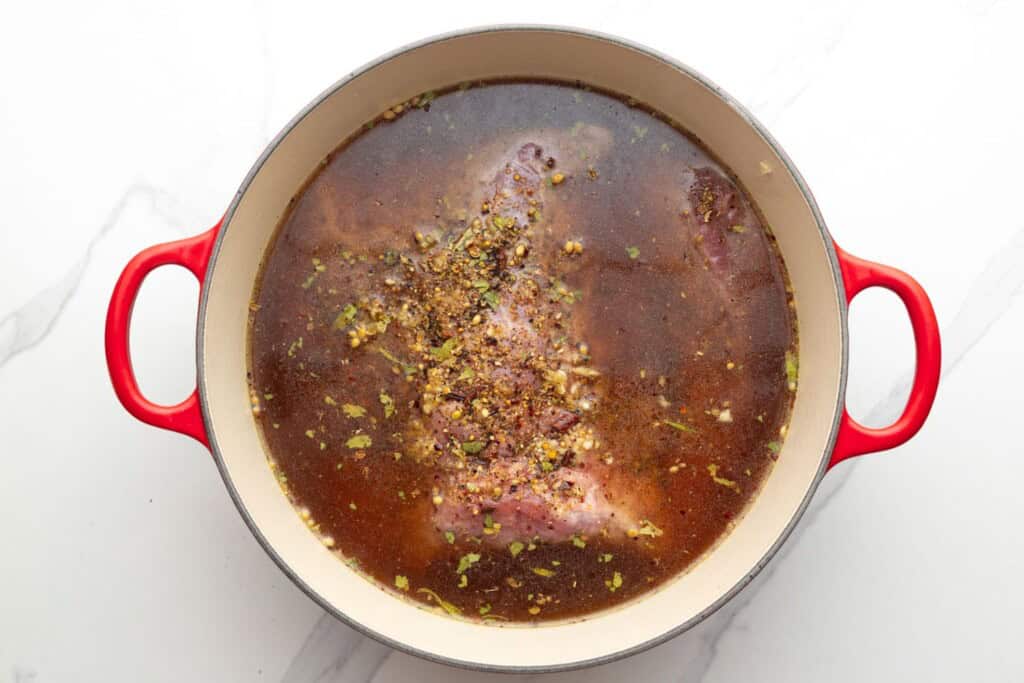
- Pat the corned beef dry with paper towels, then add it to the Dutch oven. Add garlic, corned beef seasoning, and beef broth. If using Guinness, add it here as part of the cooking liquid.
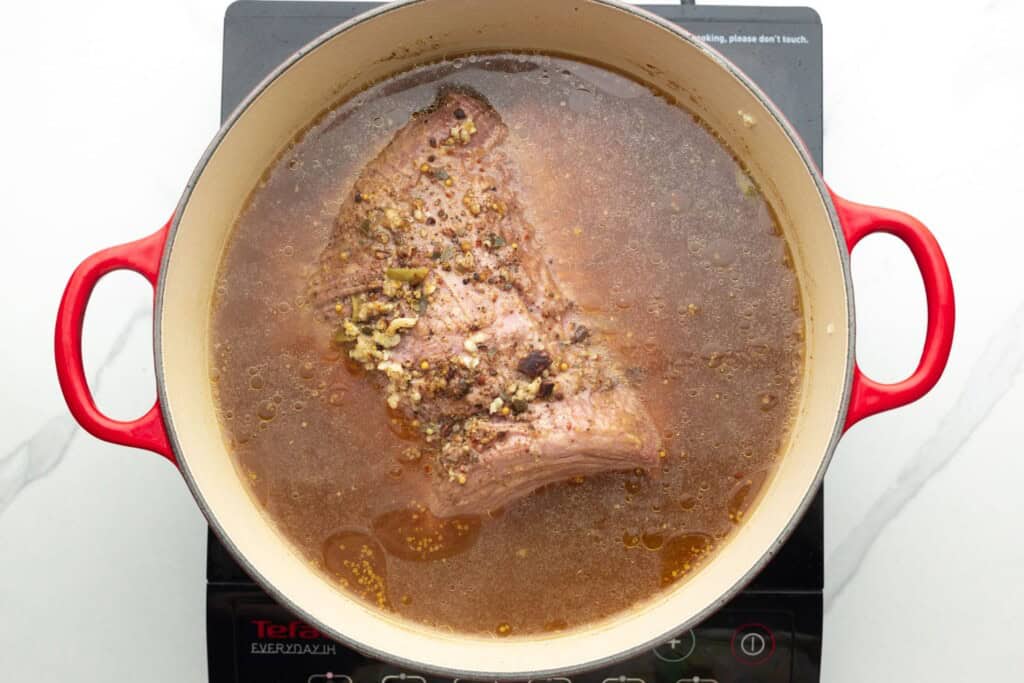
2. Simmer: Bring the liquid to a boil, then reduce to a gentle simmer. Cover and cook for about 45 minutes per pound, or about 2 hours for a 2.5-pound brisket. Larger roasts will need more minutes of cooking time.
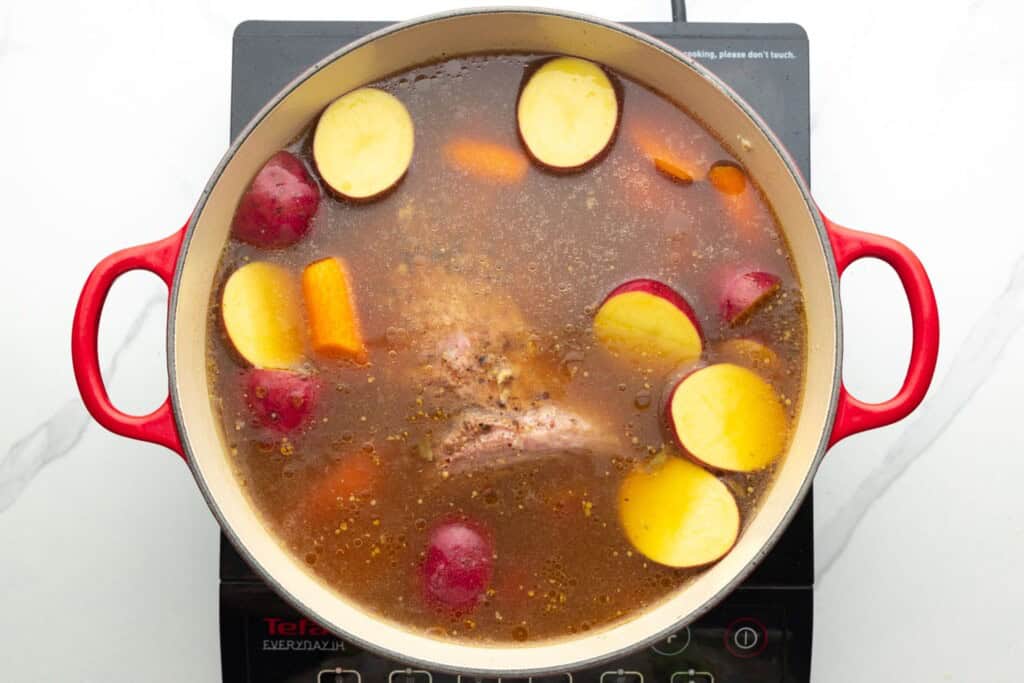
3. Now, add the carrots, and potatoes to the pot. Continue cooking for an additional 10 minutes, or until the potatoes are almost tender.
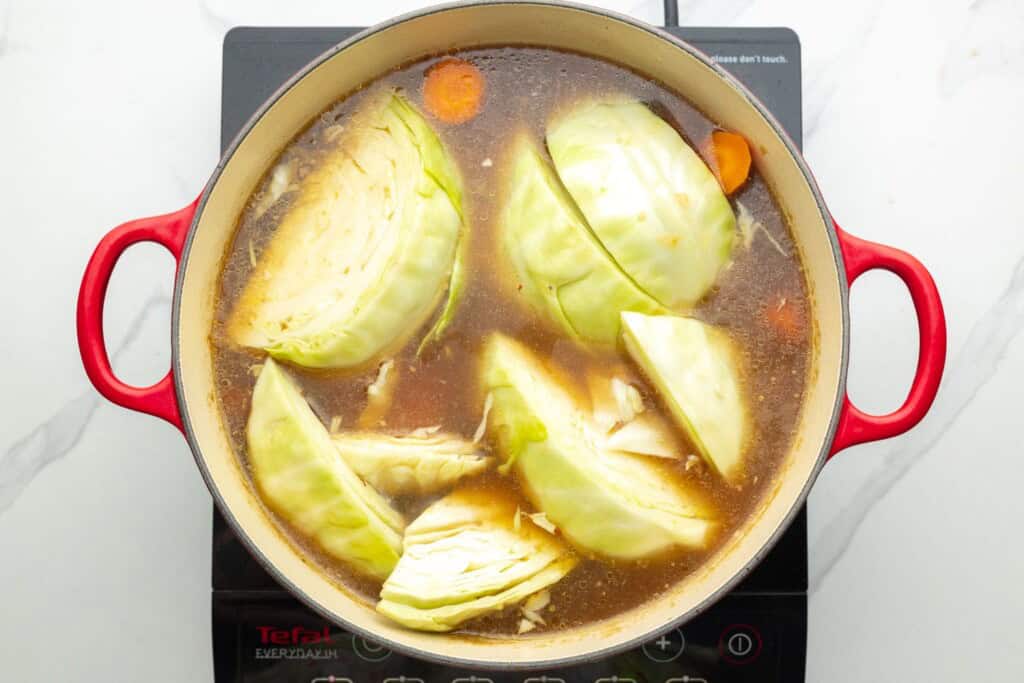
4. Rest: Carefully remove the corned beef from the Dutch oven and let it rest. Add the cabbage wedges and cook for 10 more minutes.
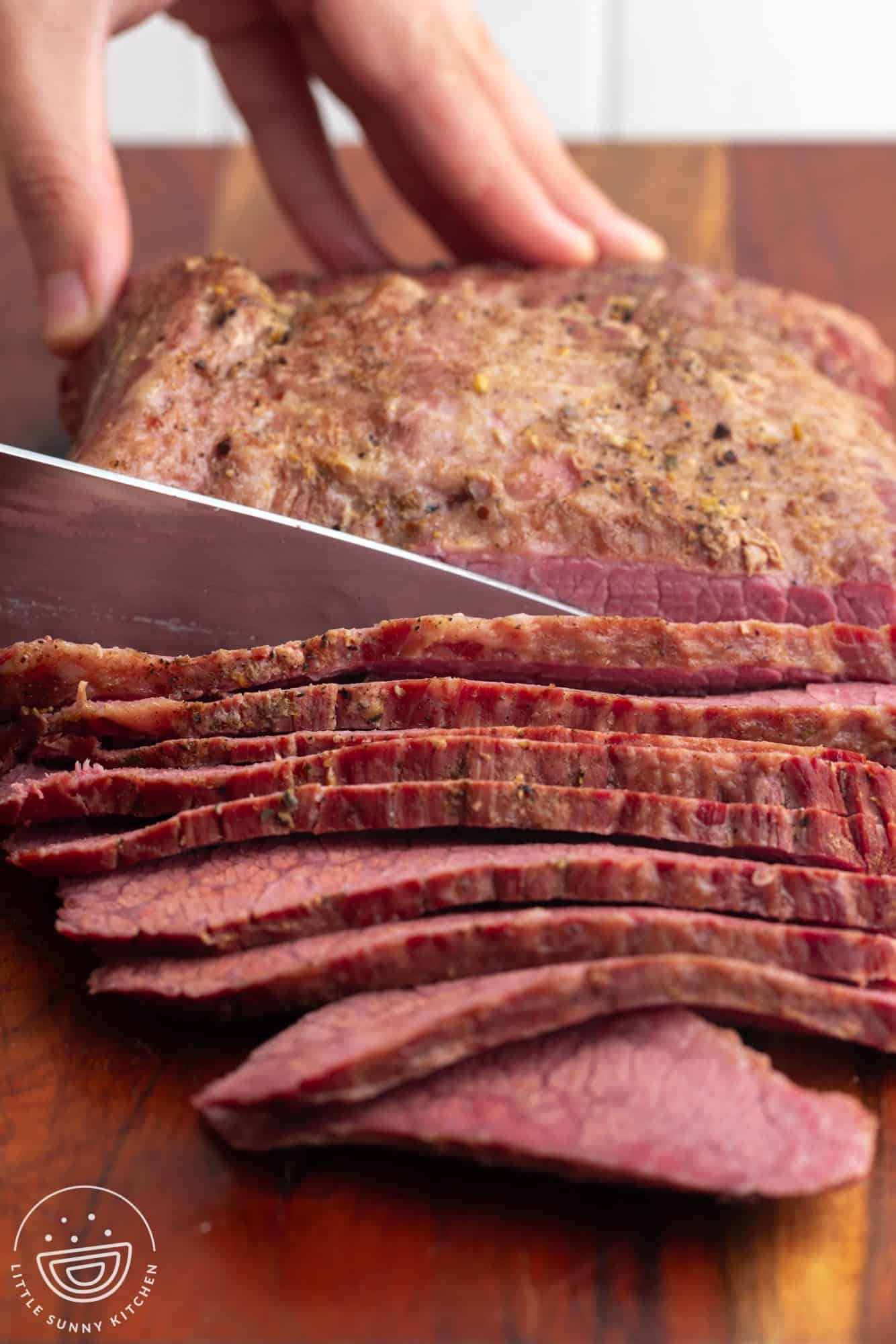
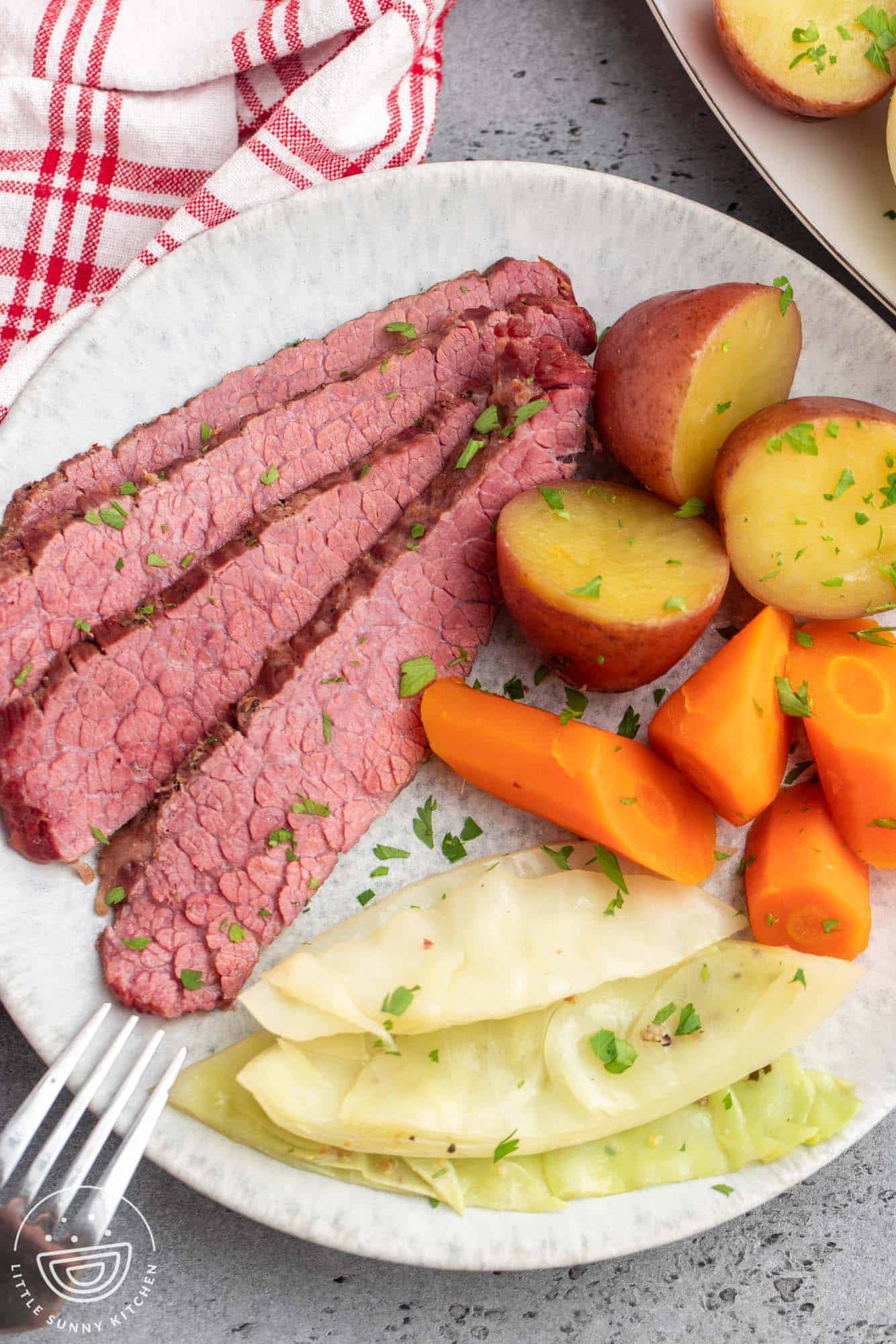
5. Serve: Slice the corned beef against the grain into thin slices. Serve with the cooked vegetables and ladle some of the cooking stock over the plates for extra flavor.
What to Watch For While It Cooks
- Keep the liquid at a very gentle simmer. You do not want the pot boiling hard. The broth should be barely bubbling so the brisket cooks slowly and stays tender.
- Use the timing as a guide, but pay attention to texture too. Corned beef is ready when it feels fork tender and easy to pierce, and the internal temperature should be between 190 and 205°F.
- Wait until the brisket is done before adding the vegetables, especially if you want the potatoes and cabbage to keep their shape. If your pot feels crowded, remove the meat first and let it rest while the vegetables finish cooking.
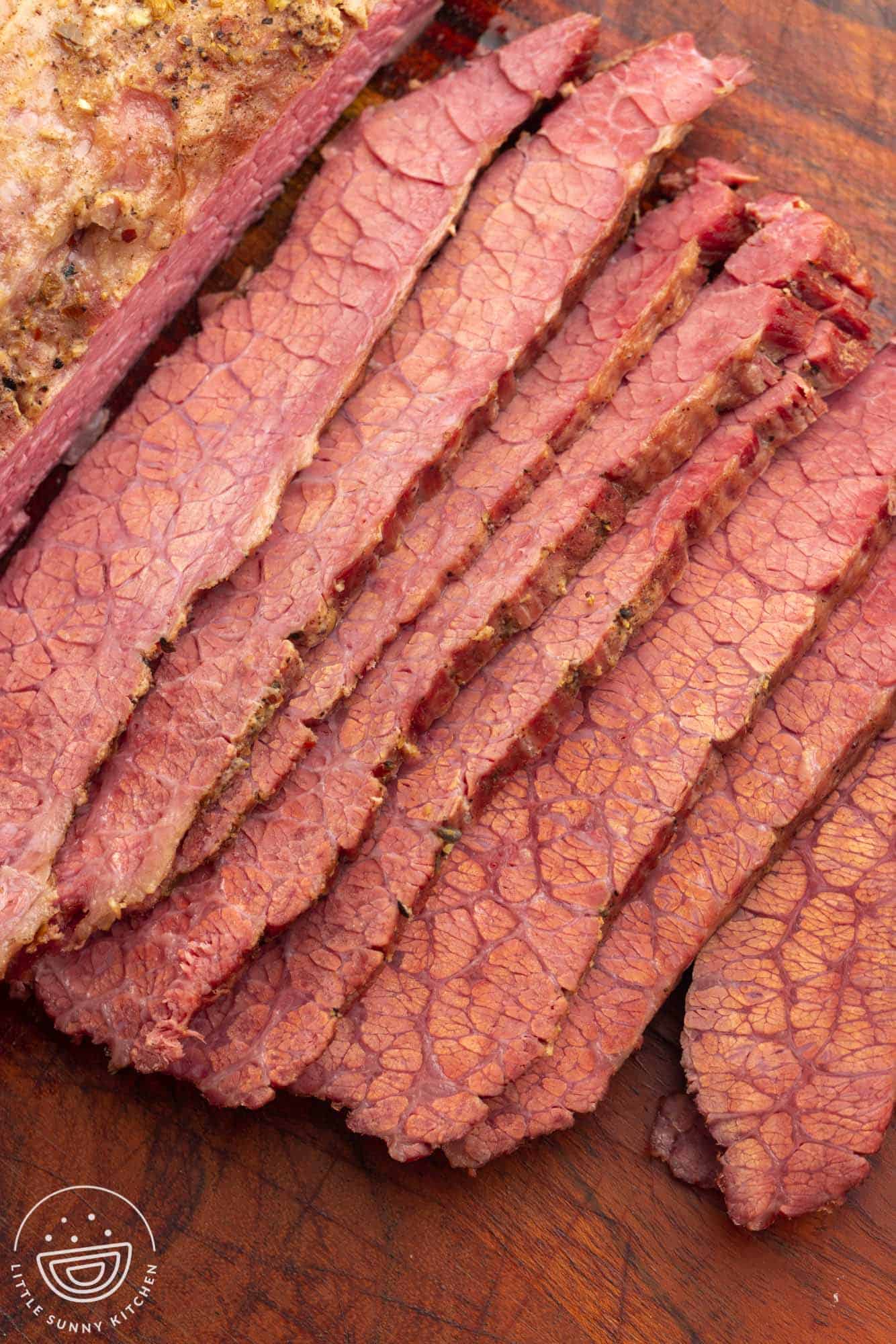
- Once the brisket is out of the pot, tent it loosely with foil and let it rest for at least 15 minutes before slicing. Then cut against the grain into thin slices so the meat stays easy to chew.
Leftovers and Reheating
Store leftover corned beef and vegetables in an airtight container in the refrigerator for up to 5 days. I like to keep a little of the cooking liquid with the meat so it stays moist.
To reheat, warm the leftovers gently on the stovetop or in the microwave with a spoonful of broth. That extra liquid helps keep the slices from drying out.
Use the leftovers for simple sandwiches, corned beef Reubens in soft rye bread, corned beef hash, reuben egg rolls, or another easy dish the next day.
If You Want to Round Out the Meal
This recipe already includes corned beef, potatoes, carrots, and cabbage, so it is a complete meal on its own. For a St. Patrick’s Day dinner, I like to add Irish soda bread, and if you want an extra potato side, colcannon is a good fit too.
Did you make this? Be sure to leave a review below and tag me on Facebook, Instagram, or Pinterest!
Dutch Oven Corned Beef
Equipment
- Large dutch oven 7-9 qt
Ingredients
- 2.5 pounds (1125 g) corned beef brisket flat cut, excess fat trimmed
- 5 medium carrots cut into 2-inch pieces
- 2 pounds (900 g) baby red potatoes halved
- 3 cloves garlic roughly chopped
- 1 head green cabbage cut into 8 wedges
- 8 cups (2 liters) beef broth or 2 cups Guiness beer and 6 cups beef broth
- 2 tablespoons corned beef seasoning or the spice packet that came with the corned beef brisket
Instructions
- Place the corned beef brisket in a large Dutch oven.
- Add the garlic, corned beef seasoning, and beef broth (and Guiness beer if using) to the pot.
- Bring the mixture to a boil over high heat. Once boiling, reduce the heat to medium-low and let it simmer.
- Cover the pot and cook for about 45 minutes per pound, approximately 2 hours for a 2.5-pound brisket, or until the internal temperature of the corned beef reaches 190-205°F (88-96°C).
- Add the carrots, and baby red potatoes to the pot. Continue to cook for an additional 10 minutes, or until the potatoes are almost tender.
- Carefully remove the corned beef from the pot and let it rest for 15 minutes. Add the cabbage wedges and cook for 10 minutes. Remove from heat.
- Slice the corned beef against the grain into thin slices. Serve the sliced corned beef with the cooked vegetables. Ladle some of the cooking stock over the meat and veggies for extra flavor.
Notes:
- Recipe Timing: The timing of this recipe is based on a brisket that weighs 2.5 pounds. If yours is larger than that, you may need to cook it longer. The general rule is that it should take about 45 minutes per pound. Using a thermometer, the internal temperature of the meat should reach 190-205°F (88-96°C).
- Low and Slow: Brisket is a tough cut of meat that requires a long, slow cooking method to make it tender. Be sure to keep the heat on your pan low enough so that it’s not boiling. You want it to be barely bubbling.
- Slice against the grain: When you’re slicing corned beef, look for the direction of the muscle grains and cut in the opposite direction. This will ensure that the muscle fibers are cut and easy to chew.
- Wait to cook the vegetables until the corned beef is done. If your Dutch oven is large enough, you can add the vegetables in with the meat and cook until done. Otherwise, remove the roast and let it rest while you boil the vegetables.
- Storage: Leftovers can be stored in an airtight container in the fridge for up to 5 days.
Nutrition Information
This website provides approximate nutrition information for convenience and as a courtesy only. Nutrition data is gathered primarily from the USDA Food Composition Database, whenever available, or otherwise other online calculators.
© Little Sunny Kitchen
FAQs
The name comes from the old brining process used to cure the meat with large grains of salt, or corns of salt. Corned beef and cabbage became especially popular in the United States as an Irish American dish, often as a substitute for bacon.
Use the same amount of beef broth instead. Guinness adds depth, but this recipe still has plenty of savory flavor without it.
Yes. A point cut brisket has more fat and may shred a bit more when sliced, but it works well in this recipe, too.
It should be fork-tender and easy to pierce, and the internal temperature should be between 190 and 205°F.
Yes, this recipe can be made in the oven, but it will take quite a bit longer. Add the ingredients to the dutch oven, but the lid on, and place it in a 350°F/180°C oven for 1 hour. Then, reduce the heat to 300°F/150°C and continue cooking for 2 hours. Finally, add the vegetables to the pot and continue cooking until they are tender, which could take another 1-2 hours.


Sue says
Can you cook in crockpot.
Little Sunny Kitchen says
Hi Sue! The timing for this recipe is meant for an oven, but you could likely do it in a crockpot on high. I’m just not sure how long you’d need to cook it for.