
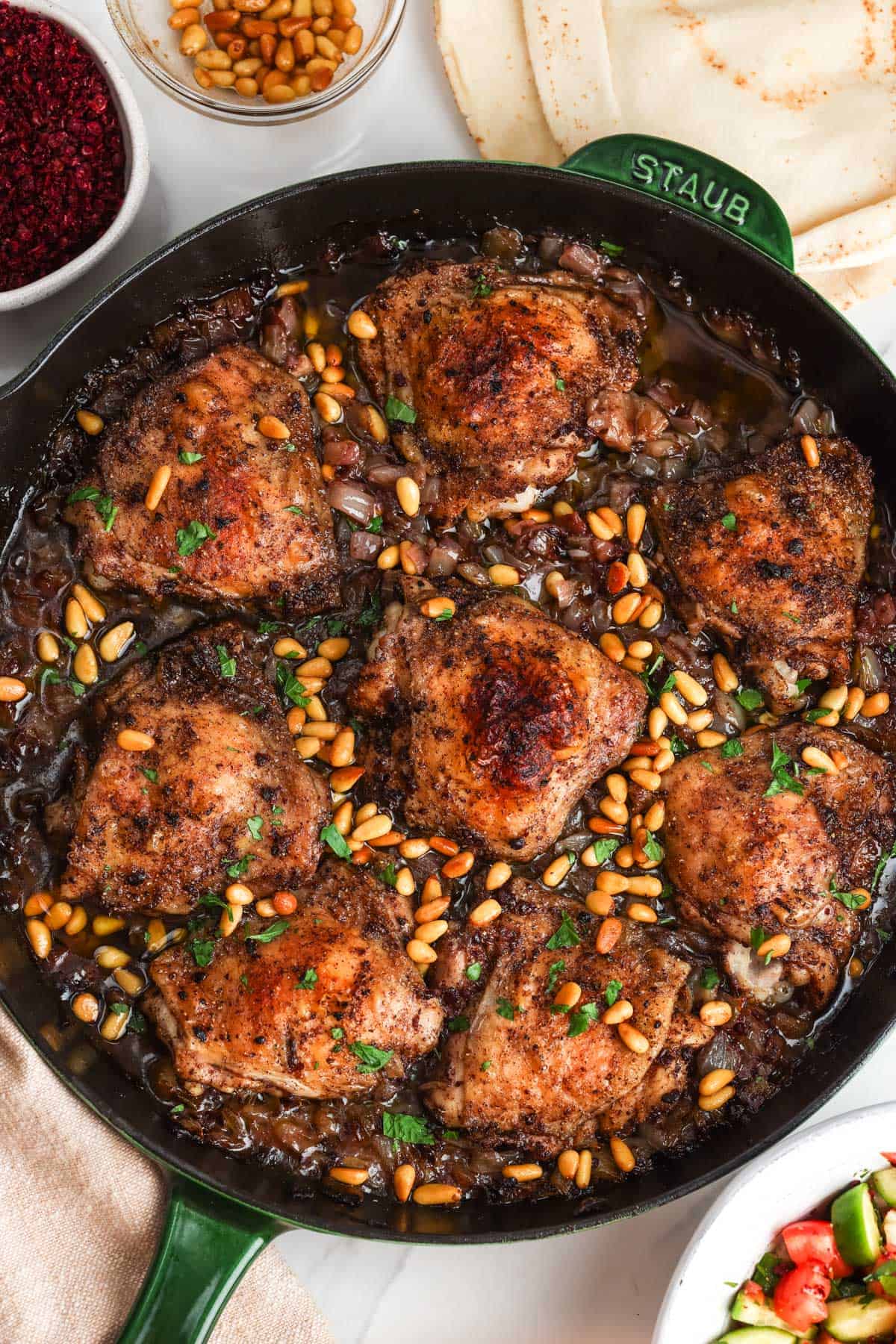
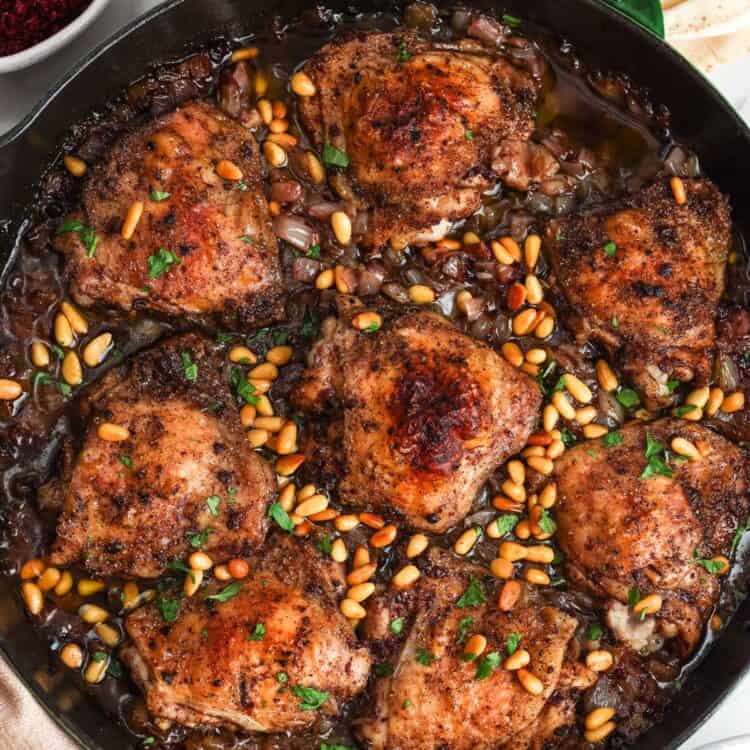
These sumac chicken thighs are baked over soft, tangy onions and finished with golden, crisp skin, toasted pine nuts, and plenty of flavorful pan juices. Everything cooks in one skillet, making this an easy, satisfying dinner that is especially delicious with warm pita, rice, or a fresh salad.

An Easier Way to Enjoy These Musakhan-Inspired Flavors
This recipe takes its inspiration from Palestinian musakhan, but I’ve made the method more accessible and streamlined for an easy everyday dinner. Everything cooks in just one pan, and honestly, the hardest job is dicing all the onions!
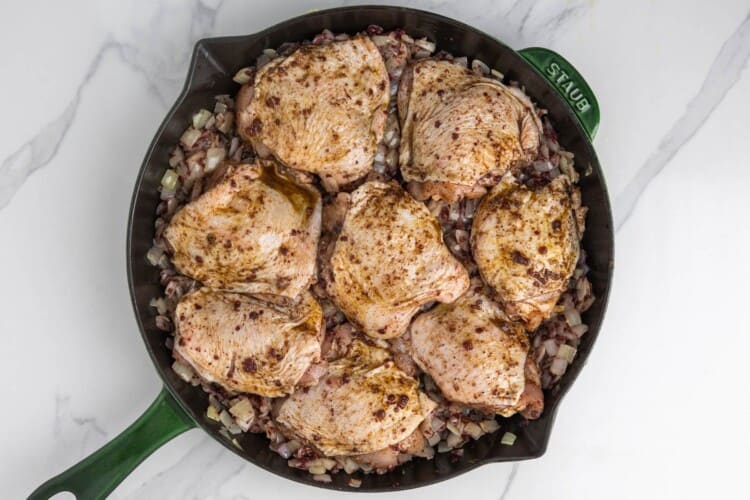
I cook the onions first, so they have enough time to soften before the chicken goes into the oven. The thighs then roast on top with the skin side up, allowing it to turn golden and crisp while the onions underneath absorb all those flavorful chicken juices.
I still serve it with warm pita, or any other flatbread to soak up the sumac onions and pan juices, but it’s just as good with rice or a simple salad.
A Few Things to Know About the Ingredients
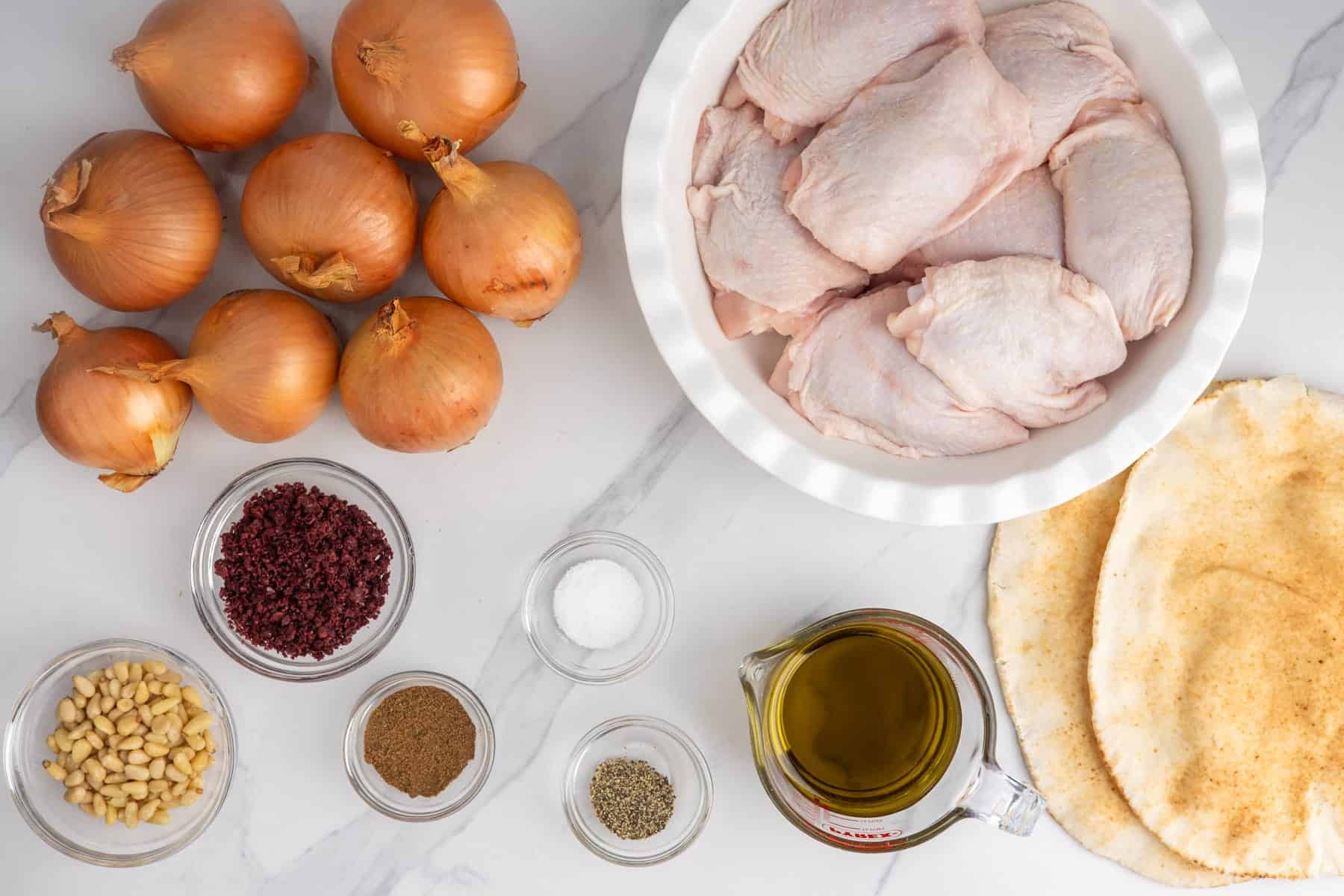
- Bone-in, skin-on chicken thighs: Use a 2-pound pack. The number of thighs will vary depending on their size, and that is fine. Pat the skin dry before seasoning so it has a better chance of crisping, and check the largest pieces for doneness.
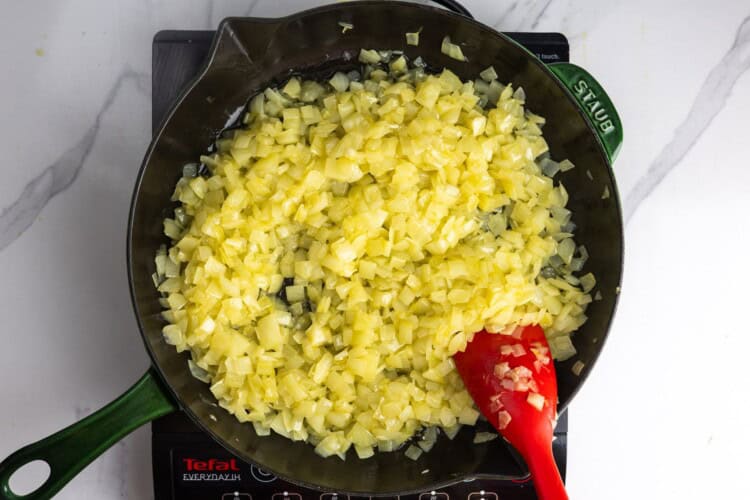
- Yellow onions: Two pounds looks like a lot at first, but the onions cook down considerably. Try to dice them fairly evenly, so they soften at the same rate. They should be completely soft and wilted before the chicken goes into the oven, but not browned.
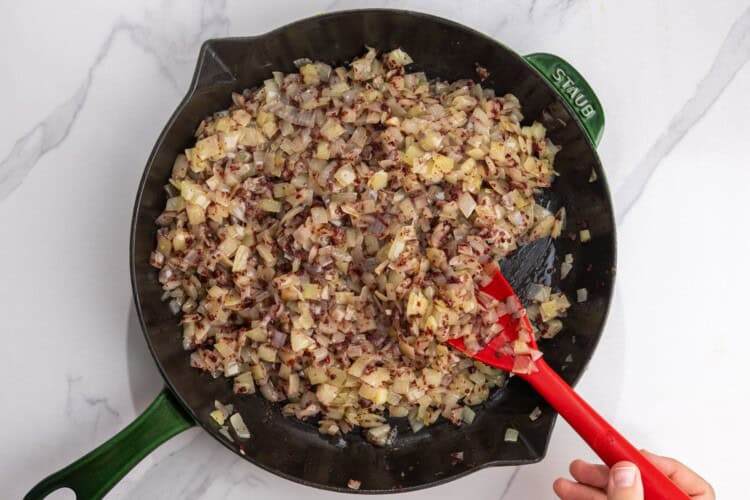
- Sumac: Use plain ground sumac. I add a little to the chicken and stir the rest into the onions after taking the skillet off the heat. This keeps the flavor bright and tangy.
- Seven-spice: This spice is optional, but adds lots of flavor. I have the recipe for 7 spice if you want to mix it up youself, or you can buy it. Otherwise, you can add a little cinnamon, cumin, nutmeg and coriander if that’s easier for you.
- Extra-virgin olive oil: The amount is intentional. It helps the onions soften without drying out and mixes with the chicken juices to create the sauce that soaks into the bread.
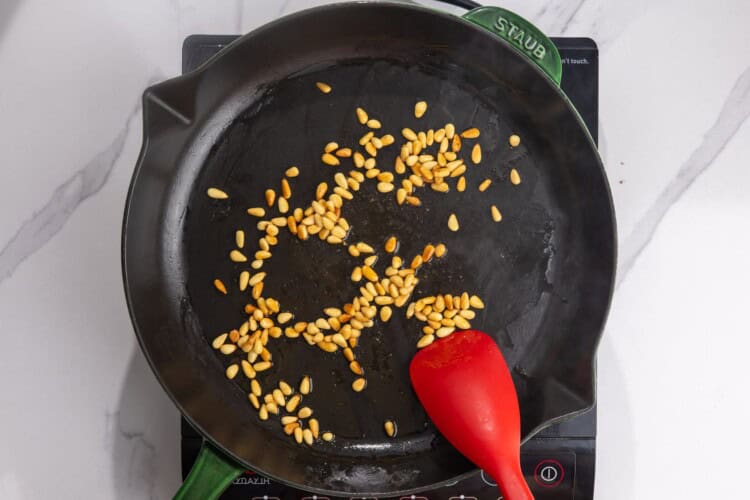
- Pine nuts: Toast them first, then take them out of the skillet before adding the onions. Keep stirring and remove them as soon as they are lightly golden because they can burn very quickly.
What to Serve with Sumac Chicken Thighs
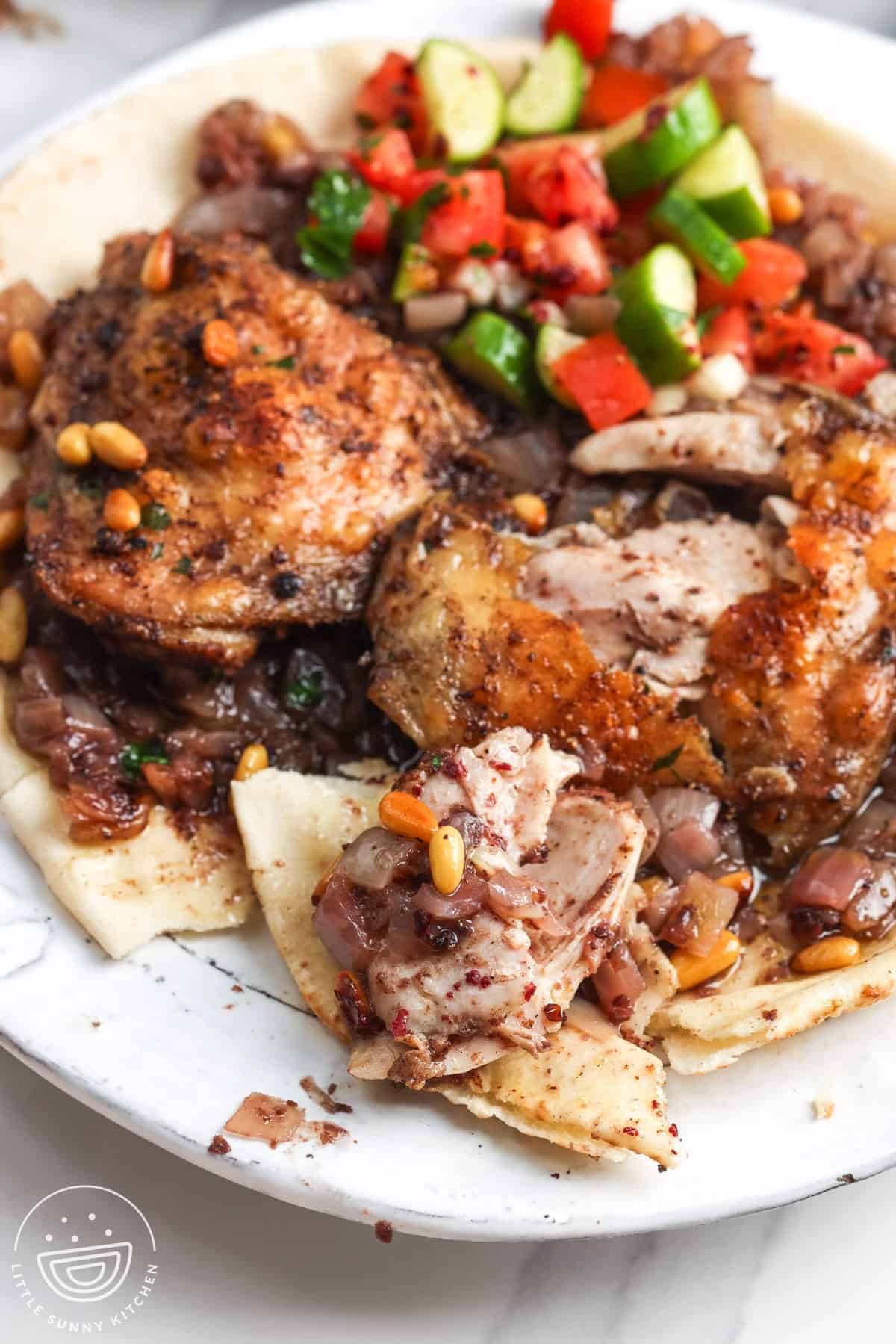
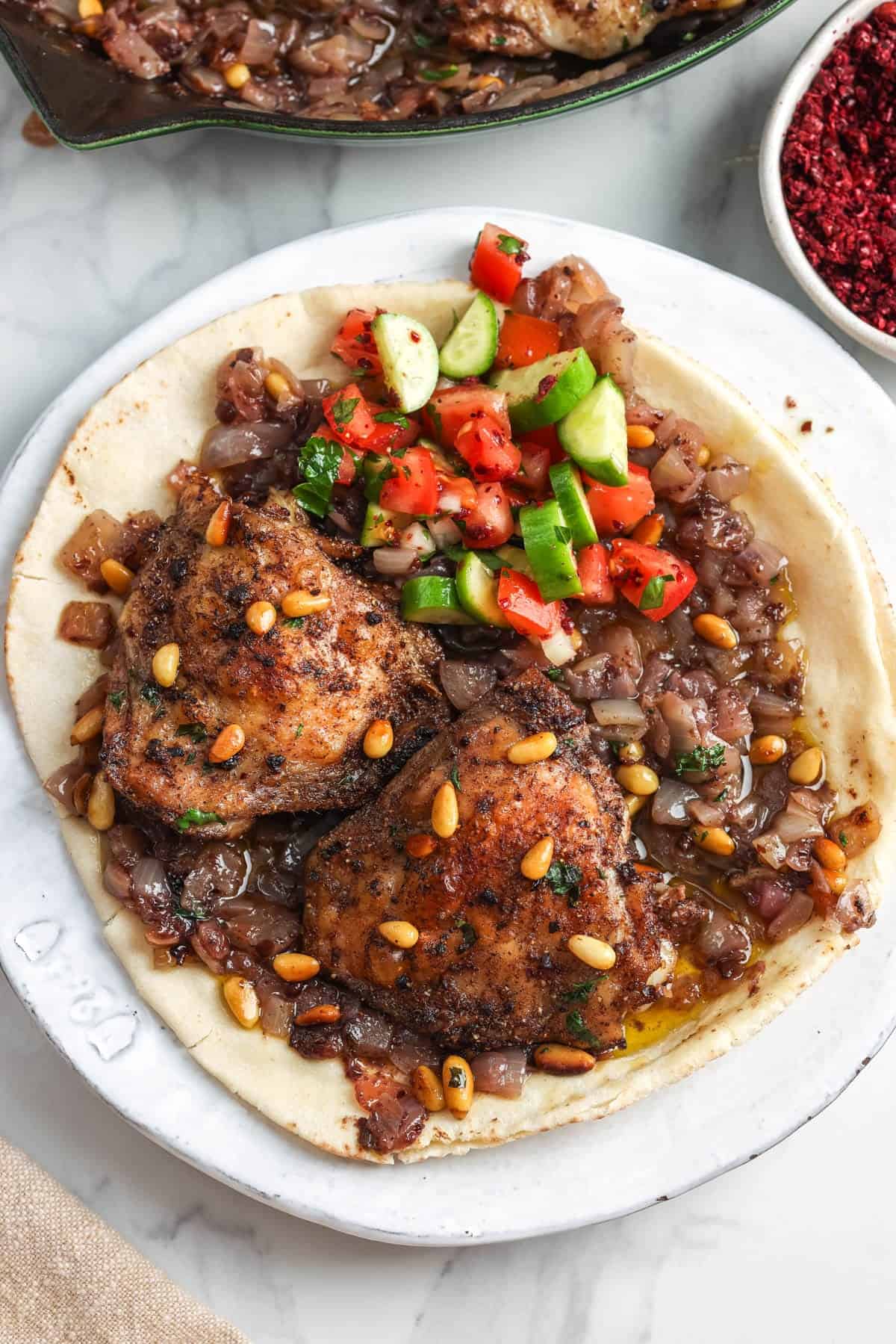
Warm flatbread is my first choice because it soaks up the soft sumac onions and all the juices at the bottom of the pan. Spoon the onions over the bread, add a chicken thigh, and finish with the toasted pine nuts.
Rice also works well when you want something more substantial. For a lighter meal, serve the chicken with a tomato and cucumber salad or a tabbouleh salad. Plain yogurt on the side is optional, but its cool, creamy flavor is a nice contrast to the tangy sumac.
Storing and Reheating Leftovers
Store the chicken and onions in an airtight container in the fridge for up to 3 days. The skin will soften as it sits, so reheat the thighs uncovered in a 375°F/190°C oven or air fryer until hot and crisp around the edges. Warm the onions separately, or place them underneath the chicken so the skin stays above the juices.
Leftovers are also good pulled from the bone and tucked into warm pita with the onions, salad, and a spoonful of yogurt.
Did you make this? Be sure to leave a review below and tag me on Facebook, Instagram, or Pinterest!
Sumac Chicken Thighs with Onions
Equipment
- Large mixing bowl or gallon zip top bag
- Oven safe cast iron skillet 12-inch (30 cm)
- Small Plate
Ingredients
- 2 pounds (900 g) chicken thighs bone-in and skin-on, 6-8 thighs
- ½ cup (120 ml) extra virgin olive oil divided
- 2 teaspoons 7 spice (baharat) optional
- 1½ teaspoons kosher salt divided
- ½ teaspoon ground black pepper
- 5 tablespoons (40 g) sumac divided
- ¼ cup (34 g) pine nuts
- 2 pounds (900 g) yellow onions diced
- Chopped fresh flat leaf parsley for serving, optional
- Warm flatbread pita bread, taboon, or naan, for serving
- Plain yogurt and a simple salad for serving, optional
Instructions
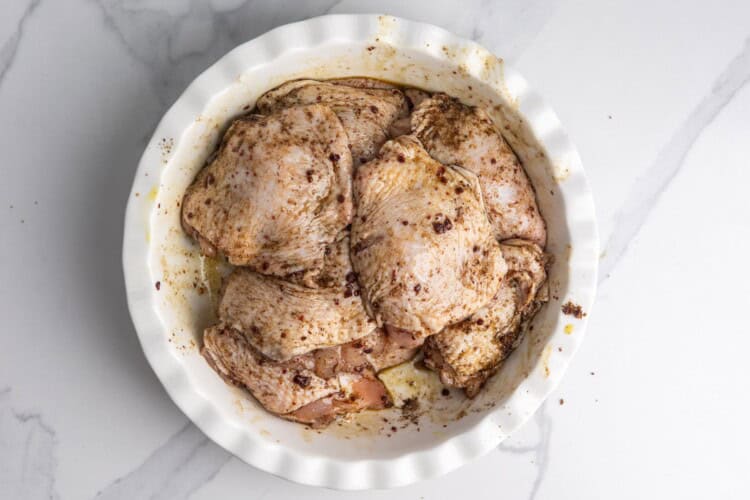
- In a large bowl or ziptop bag, combine the chicken with 2 tablespoons of the olive oil, seven spice, 1 teaspoon of the salt, ground black pepper, and 1 teaspoon of the sumac. Toss until evenly coated, then marinate at room temperature for 30 minutes or refrigerate for up to 24 hours.

- Preheat the oven to 350°F (180°C). Heat 1 tablespoon of the olive oil in a 12 inch oven safe skillet over medium heat.
- Add the pine nuts and cook for about 2 minutes, stirring frequently, until lightly golden. Immediately transfer them to a plate.
- Add the remaining 5 tablespoons olive oil, diced onions, and remaining ½ teaspoon salt to the skillet. Cook for about 15 minutes, stirring regularly, until the onions are very soft and wilted but not browned.
- Remove the skillet from the heat and stir the remaining sumac into the onions. Arrange the chicken over the onions with the skin facing up and exposed.
- Bake for about 35 minutes, or until the thickest part of the chicken registers 175 to 185°F (79 to 85°C) without the thermometer touching the bone.
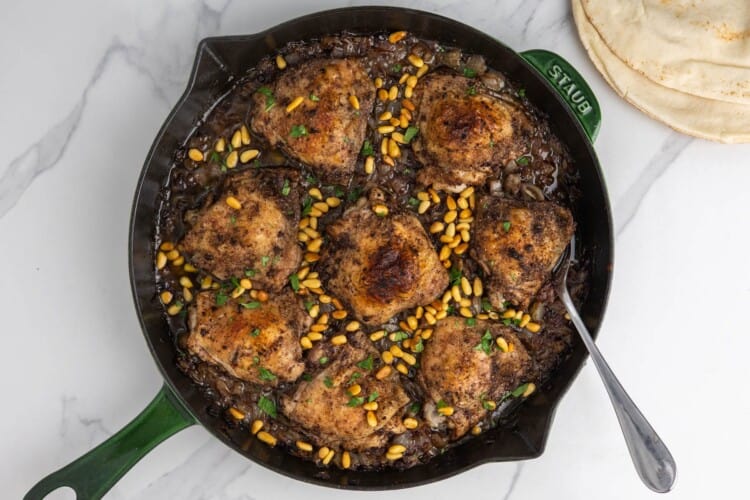
- Broil for 2 to 4 minutes, watching closely, until the chicken skin is golden and crisp. Sprinkle the chicken and onions with the toasted pine nuts and parsley, if using.
- Place warm bread on each plate and spoon the onions and some pan juices over it. Top with a chicken thigh and serve with yogurt and salad, if desired.
Notes:
- The skillet will look very full when the onions are first added. They will soften and reduce considerably as they cook.
- Remove the pine nuts when they are lightly golden because they will continue darkening on the plate.
- Use pure ground sumac without added salt. If your sumac contains salt, reduce the kosher salt as needed.
- Chicken is safe to eat at 165°F (74°C), but chicken thighs become more tender when cooked to 175 to 185°F (79 to 85°C).
- The nutrition estimate does not include bread, yogurt, salad, or optional parsley.
Nutrition Information
This website provides approximate nutrition information for convenience and as a courtesy only. Nutrition data is gathered primarily from the USDA Food Composition Database, whenever available, or otherwise other online calculators.
© Little Sunny Kitchen

Leave a Review!